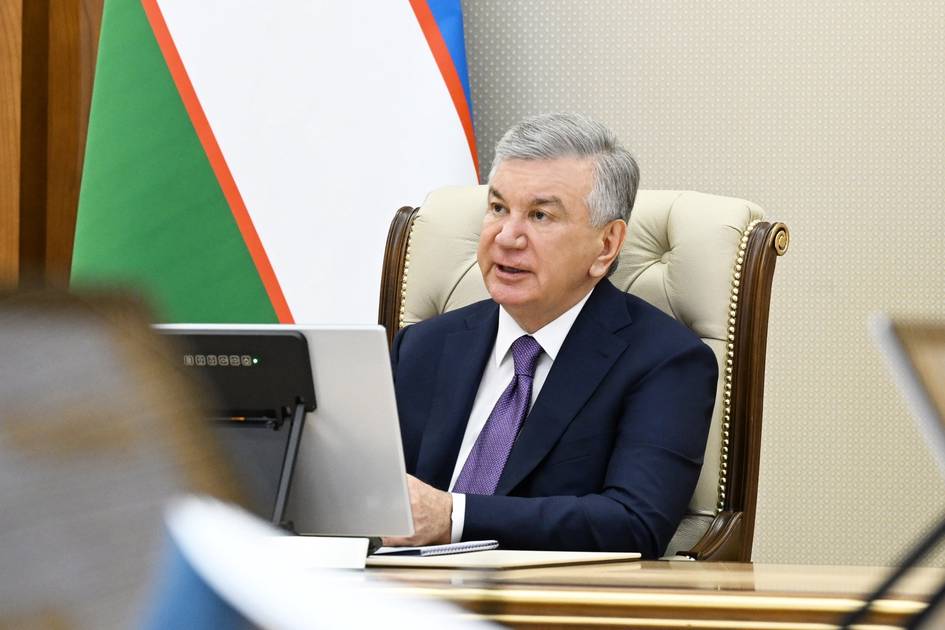
President Shavkat Mirziyoyev reviewed key measures aimed at strengthening the healthcare system, focusing on enhancing service quality, modernizing infrastructure, and increasing private sector participation.
Alongside the rapid growth in clinic numbers, the scope of medical services has widened considerably. The number of specialties offered by private providers has increased from 39 to 116, while total bed capacity has expanded from 16,000 to 57,000. As a result, the private sector’s share of overall bed capacity is expected to rise from 12% to 31%.
Despite this progress, officials acknowledged persistent challenges, including weak quality control mechanisms, outdated licensing requirements, and the lack of a unified digital system to monitor private healthcare providers. Investment coordination in the sector also remains underdeveloped.
Source: Presidential Press Service
To address these issues, the government plans to overhaul licensing procedures. All licensing functions will be transferred to the Center for Licensing and Accreditation of Medical Organizations, with stricter requirements to be introduced from July 1, 2026. Fourteen of the existing 48 licensing criteria will be revised to better ensure patient safety and service quality. Authorities also plan to move away from fully suspending multi-profile clinics, instead applying targeted restrictions only in areas where violations are identified.
Regulatory oversight will be strengthened through the introduction of remote monitoring via an electronic information system.
Reforms will also allow private medical institutions to provide state-funded services within their licensed scope, while accredited private clinics will gain the right to conduct transplantation procedures. Starting from 2028, the Insurance Fund will cease purchasing services from non-accredited medical institutions.
In parallel, Uzbekistan will introduce mandatory licensing for all state medical institutions by 2030. This process will begin with 55 republican institutions by April 2027, followed by 413 regional facilities by the end of 2028, and more than 3,000 district and city-level organizations by 2030.
Source: Presidential Press Service
To stimulate private sector growth, the government plans to allocate UZS 200bn ($16.8mn) in preferential loans for new clinics in remote areas. Projects may receive up to UZS 10bn ($836,820) in financing for up to 10 years, with up to 50% of the base interest rate subsidized. Additional incentives include a reduced 1% social tax rate for foreign medical specialists and customs exemptions on imported medical equipment.
Authorities also outlined plans to improve investment flows through the establishment of an Agency for the Development of the Medical and Pharmaceutical Industry. The agency will provide single-window support to investors, oversee public-private partnership projects, and manage the transition of state medical institutions to professional management. A new joint-stock company, Health Invest, will be created under the agency to coordinate investment initiatives.
The reforms will be complemented by the development of a transformation strategy for state medical institutions based on corporate governance principles, with input from international experts. Urban planning and sanitary regulations for healthcare facilities are also set to be updated in line with global standards.
The president approved the proposed measures and instructed relevant authorities to ensure their timely implementation.