President of Shavkat Mirziyoyev reviewed measures aimed at improving the sustainability of manufacturing enterprises and addressing operational challenges affecting businesses in Uzbekistan.
The discussion focused on the need to complement ongoing efforts to support entrepreneurship, investment, and new production capacity with measures to ensure the full utilization of existing industrial assets. Priority was given to maintaining stable operations at commissioned enterprises and increasing their output and export capacity.
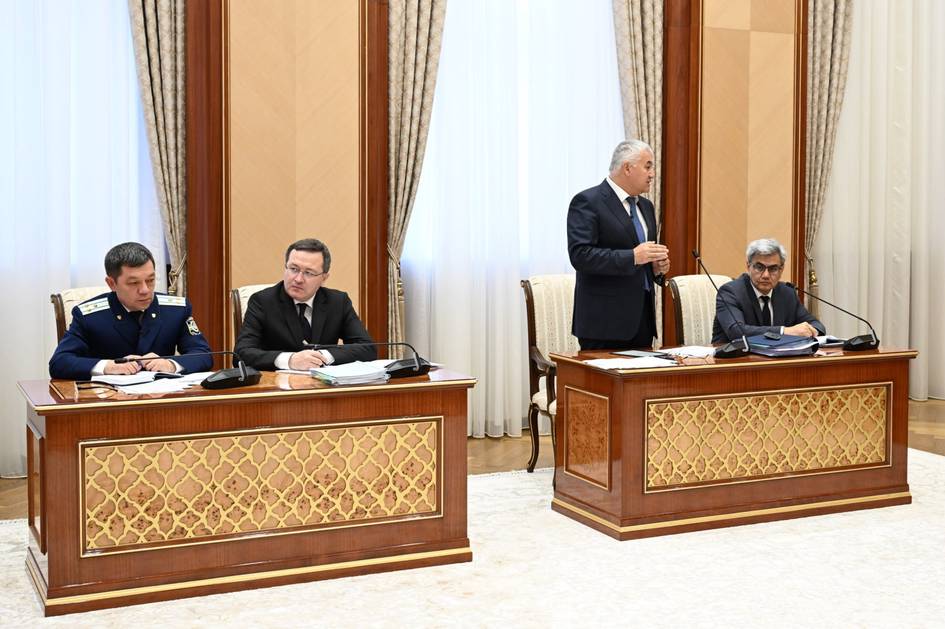
During the presentation, the results of a study on enterprises operating below capacity or experiencing declining revenues were examined. Such cases were identified across sectors including textiles, construction, food processing, petrochemicals, and electrical engineering. Contributing factors include insufficient working capital, limited access to utility infrastructure, delays in project implementation, worn-out equipment, disruptions in raw material supply chains, and reduced demand.
Source: Presidential Press Service
According to the assessment, restoring production and fully utilizing existing capacities could generate an additional UZS 65.6 trillion (over $5.4mn) in output and exports. In response, a new system will be introduced to conduct individual assessments of enterprises and support their return to full capacity. A Republican Headquarters will be established with the participation of relevant ministries, agencies, and banks. Its representatives are expected to conduct on-site visits within two weeks to identify operational constraints and implement corrective measures.
For enterprises with recovery potential, banks and responsible authorities will coordinate the provision of credit funds, including working capital, as well as address infrastructure and supply-related issues. The meeting also addressed the issue of large assets held on bank balance sheets. Currently, 70 such assets, each valued at over 10 billion soums (over $830,000), are recorded. A mechanism is to be developed to bring these assets into economic circulation by attracting investors and establishing production facilities.
The effectiveness of projects implemented under investment programs was also reviewed. It was noted that some enterprises launched in 2021–2025 as part of nearly 17,000 projects do not fully reflect their activities in tax and statistical reporting. Relevant officials were instructed to review these projects and ensure accurate reporting and taxation.
Regulatory and administrative issues affecting the business environment were also discussed. These include requirements related to signage and branding, administrative procedures in the food service and retail sectors, labor relations, tax incentives, financial penalties, cashless payments, and documentation in foreign economic activity.
It was noted that under current regulations, signage displaying a company’s name, activity, or trademark may in some cases be classified as advertising, requiring permits and associated payments. A proposal was put forward to exclude such information from advertising classification and abolish the requirement to obtain permits. Additional proposals include introducing phased design standards for signage placement and simplifying procedures for placing trademarks on vehicles owned by legal entities.
Further measures discussed include simplifying value-added tax refund procedures for food service enterprises and easing environmental compliance requirements for certain retail and service sector facilities. Clarifications to labor relations procedures between employers and employees were also proposed.
Digitalization and the expansion of cashless payments were identified as key areas of focus. Proposals include improving banking infrastructure, enabling commission-free transfers between bank cards of the same individual, expanding payment options, and improving cashback mechanisms. Alternatives to SMS-based transaction notifications, such as mobile application notifications and biometric identification, were also considered.
In the area of tax administration, proposals include limiting penalties for tax arrears so that they do not exceed the principal debt and addressing inconsistencies in the application of tax incentives. Measures to prevent misuse of systems for reporting the non-issuance of receipts and to improve procedures related to VAT payer status were also discussed.
To facilitate foreign economic activity, proposals were made to reduce duplicate documentation in import procedures and to simplify processes for opening trading houses, branches, and representative offices abroad. The use of Uzexpocentre was also discussed as a platform to promote national products in international markets.
The president instructed responsible authorities to implement measures aimed at restoring enterprise activity, improving financial stability, increasing production and exports, creating jobs, and reducing administrative barriers for businesses.