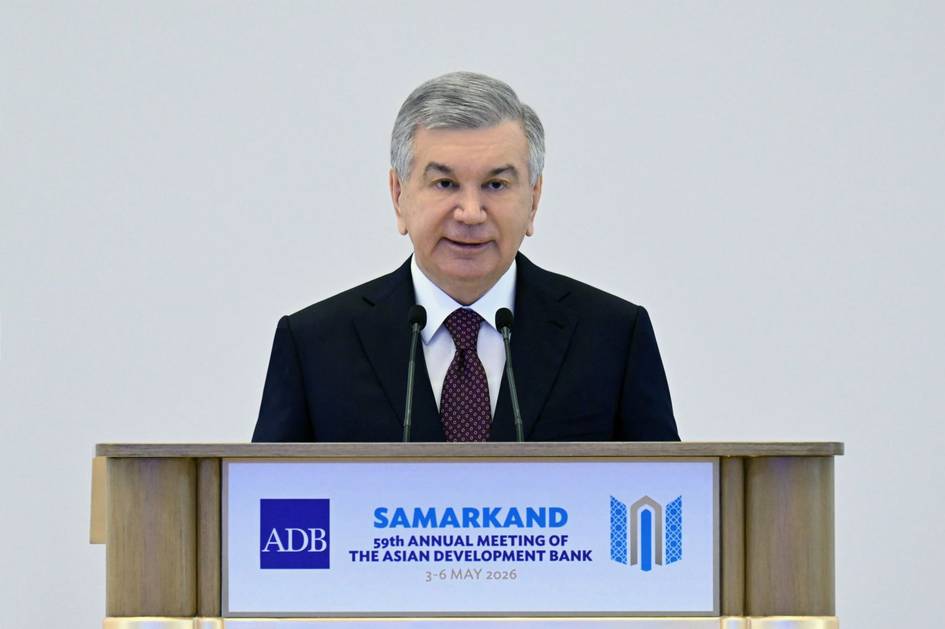
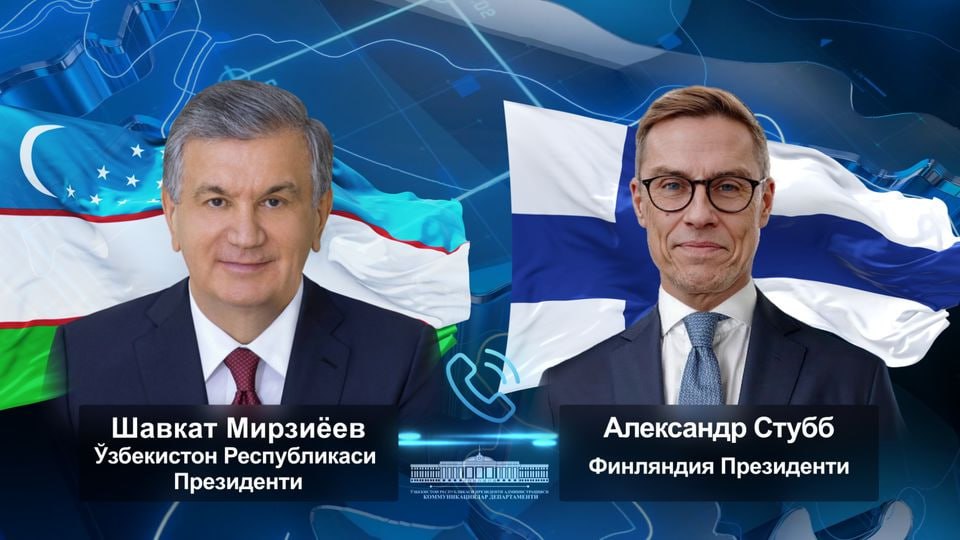
In his speech, the president highlighted the scale of reforms implemented in recent years.
“In a historically short period, we have attracted $150bn in foreign investment and launched thousands of modern enterprises,” he said.
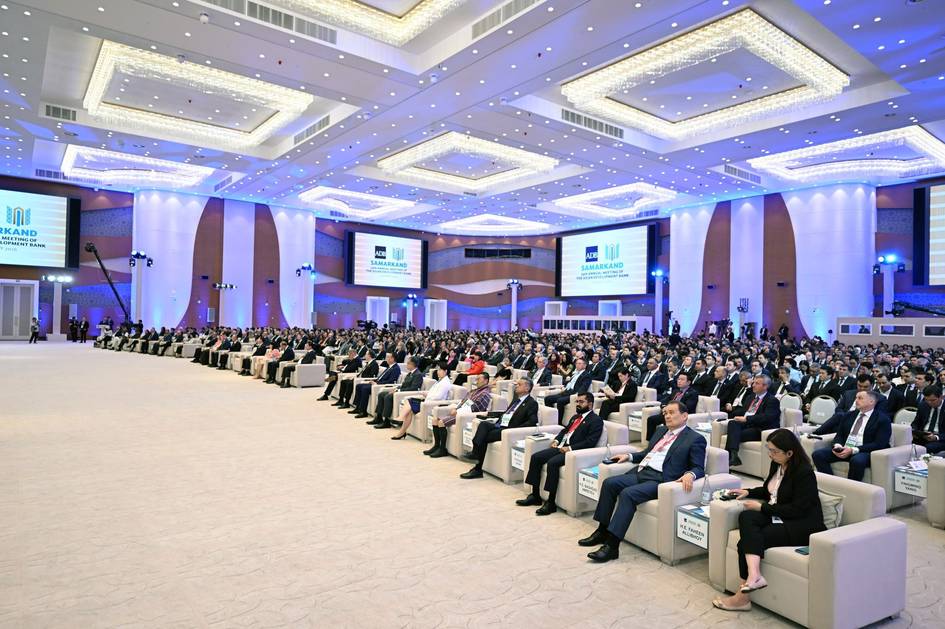
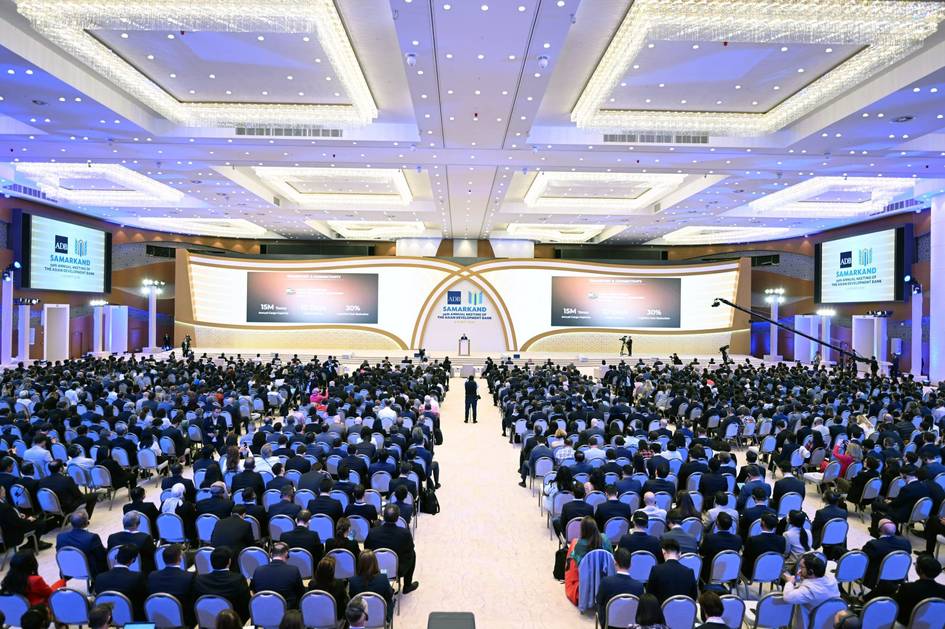
The agenda focused on key global priorities, including digital and green transformation, climate resilience, supply chain development, and food security.
Uzbekistan’s economy has grown from $50bn to $147bn, while exports of goods and services have tripled. Even amid global uncertainty, the economy expanded by 8.7% in the first quarter of 2026.
Mirziyoyev also emphasized the social impact of reforms. “We increased the income of 8.5mn people in need, reducing the poverty rate from almost 35% to 5.8%,” he noted.
Source: Presidential Press Service
The president added that since 2020, Uzbekistan has consistently improved its sovereign credit ratings and, in the latest Index of Economic Freedom, rose by 14 positions to enter the group of countries with a “moderately free” economy.
Cooperation with ADB has already reached nearly $16bn in joint projects, particularly in renewable energy, housing, and regional integration. The newly signed $12.5bn program is expected to expand collaboration in infrastructure, poverty reduction, and human capital development.
Looking ahead, Uzbekistan aims to grow its economy to over $240bn by 2030, achieve upper-middle-income status, and fully eradicate poverty.
Source: Presidential Press Service
Digital transformation and artificial intelligence were highlighted as key priorities. Uzbekistan is currently implementing more than 200 AI-related projects, alongside expanding data centers and supercomputing capacity. A national initiative to train 5mn AI specialists is also underway.
“Digital technologies and artificial intelligence are transforming all sectors, creating entirely new formats of development,” the president said.
He noted that AI solutions are being introduced in areas directly impacting people’s lives, including education, healthcare, water management, environmental protection, and food security.
Uzbekistan also expressed readiness to join the ADB’s “Digital Highway for Asia” initiative by establishing a regional coordination center in Tashkent, and proposed launching a joint program to scale AI across developing countries.
Source: Presidential Press Service
Energy transition remains another strategic focus. Uzbekistan has already commissioned 5,600 MW of renewable energy capacity and plans to increase the share of renewables to 54% by 2030. The country is also working with partners on the Central Asia–Europe green energy corridor to expand clean energy exports.
Regional connectivity and logistics were also emphasized. The China–Kyrgyzstan–Uzbekistan railway is expected to reduce cargo delivery times by up to 10 days and significantly boost transit potential. In this context, the president proposed creating a Digital
Customs and Logistics Alliance within the ADB’s CAREC regional economic cooperation program.
Uzbekistan is also expanding cooperation in critical minerals, with more than 70 projects worth $1.6bn aimed at moving from raw extraction to high value-added production. The country expressed interest in joining ADB’s “From Critical Minerals to Production” initiative.
Source: Presidential Press Service
Climate and environmental sustainability were highlighted as key priorities. Uzbekistan proposed a regional “Green Belt of Central Asia” project to complement national efforts, including large-scale afforestation in the Aral Sea region.
In addition, the president put forward an initiative to create a “Central Asia Tourist Ring”, integrating the region’s cultural, historical, and natural attractions into a unified tourism space.
To support these initiatives, Mirziyoyev proposed establishing an Innovative Platform for Financing Regional Projects, emphasizing the importance of mobilizing private capital alongside international financial institutions.
He also expressed gratitude to partner institutions, including the World Bank, the International Monetary Fund, the Islamic Development Bank, the Asian Infrastructure Investment Bank, and the European Bank for Reconstruction and Development for their continued cooperation.
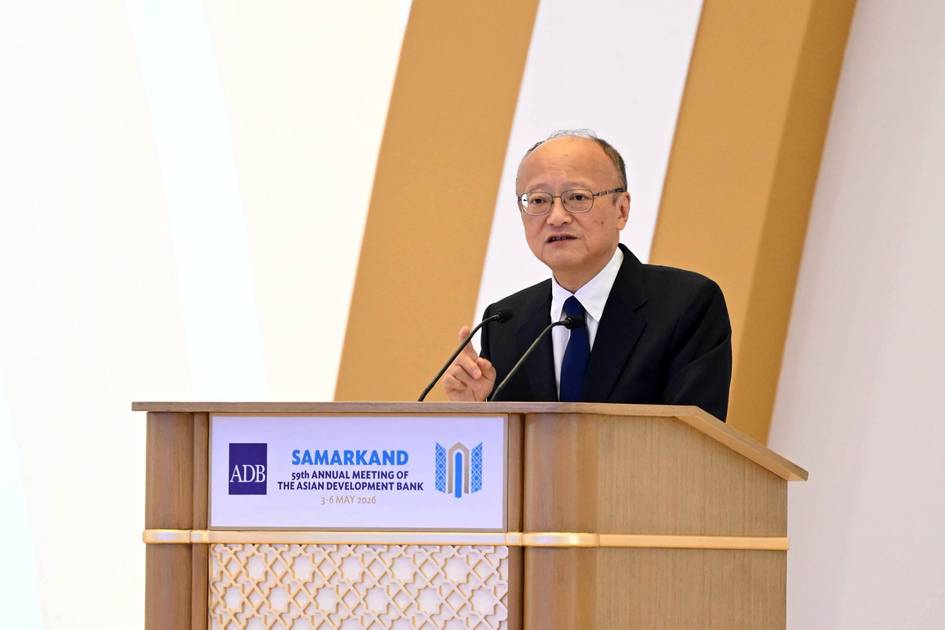
Concluding his remarks, the president emphasized the growing role of ADB in ensuring regional stability and expressed confidence in the outcomes of the forum. “Each agreement will result in tangible and beneficial projects,” he expressed.