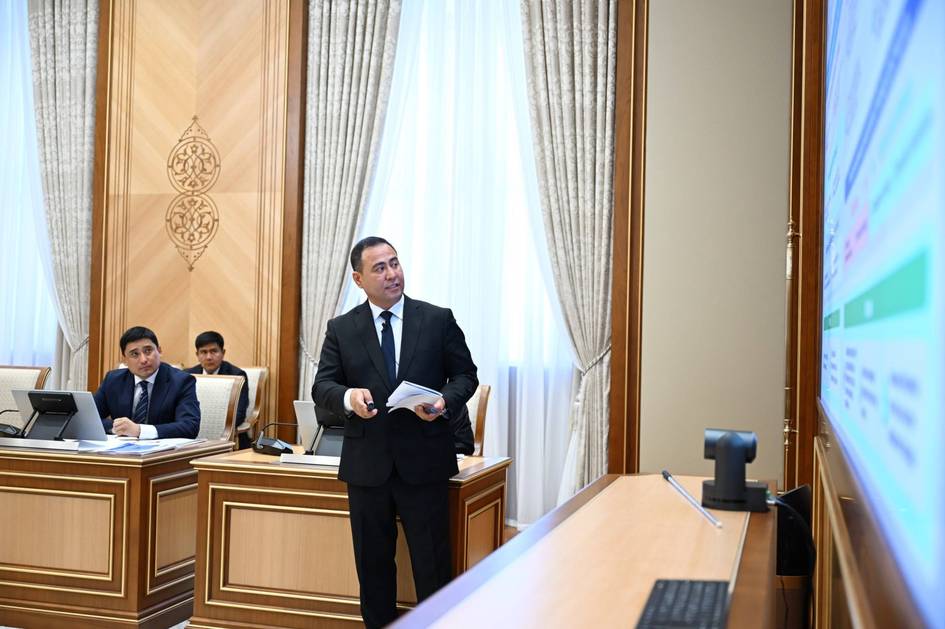
The proposals were reviewed by Shavkat Mirziyoyev on May 6 and focus on simplifying administrative procedures, expanding digitalization, and minimizing manual intervention in regulatory processes. At present, obtaining a construction permit requires 8 documents and may take between 3 and 12 months. Under the proposed changes, 2 documents will be abolished and 2 others generated automatically through digital integration, reducing the time required for submitting and reviewing applications by sevenfold.
The integration of design permits and architectural planning assignments into a single automated document is expected to eliminate manual processing stages. Procedures that previously took up to 30 working days will be fully automated through the ShaffofAI system.
Licensing procedures for design and survey organizations, construction contractors, and expert institutions will also be revised. Currently, applicants must submit between 3 and 30 documents, and the review process can take up to 14 working days. Under the new system, data will be verified automatically through electronic databases, eliminating the need to attach documents. The time required to issue licenses will be reduced from 14 working days to approximately 5 minutes, with decision-making accelerated by 97%.
Source: Presidential Press Service
Reforms are also planned for the commissioning of construction projects. In 2025, more than 20,000 applications for commissioning were rejected, requiring applicants to spend between 1 and 3 months correcting deficiencies. Under the new approach, the number of required documents for state-funded projects will be reduced from 3 to 1, while conclusions of technical and author supervision, declarations of conformity, and related data will be generated automatically through digital systems. As a result, the commissioning period will be reduced from 2 months to 15 days.
The review also addressed current practices of rejecting projects due to architectural or planning changes that do not affect structural integrity or fire safety. Under the proposed changes, such projects may be commissioned with minor adjustments rather than being rejected.
Digital supervision of construction sites is another key component of the reform package. At present, there is no mandatory requirement to install video surveillance at construction sites. It is proposed to introduce cameras, initially at social facilities, multi-apartment residential buildings, and large commercial, industrial, and tourism projects valued at more than UZS 3bn (over $248,000). This measure is intended to enable early detection of deviations from approved designs, improve workforce monitoring, reduce informal wage payments, and strengthen labor safety.
The effectiveness of technical and author supervision was also examined. In 2025, supervision specialists identified 42,000 deficiencies at construction sites, while inspectors later recorded more than 250,000 additional violations. To address these gaps, a registry and rating system for supervision organizations will be introduced through the Transparent Construction platform. Supervisory activities will be monitored remotely, all executive documentation will be digitized, and performance-based measures will be introduced. Specialists with low ratings will undergo retraining, while certificates of high-performing specialists will be extended.
Measures to strengthen quality control over construction materials were also proposed. All materials delivered to construction sites will be registered in a national electronic monitoring system, and documentation confirming product quality will be mandatory. Administrative liability will be introduced for contractors using substandard materials.
In addition, new approaches to laboratory testing are planned. Mobile construction testing laboratories will be established to operate in remote areas, doubling coverage of facilities, enabling faster testing, and ensuring compliance with established standards.
The issue of illegal construction was reviewed in detail. As of April 1, a total of 3,791 unauthorized construction projects were identified across the country, including 1,933 in industrial zones. Violations include the absence of land rights documentation, design permits, and approvals from urban planning and expert bodies. Proposed measures include sending automated notifications to citizens and legal entities about construction requirements from the moment land rights are obtained, integrating digital platforms, and strengthening legal liability for unauthorized construction.
Oversight of multi-apartment housing management was also discussed. The number of cases involving unauthorized dismantling of load-bearing structures increased from 563 in 2023 to 2,484 in 2025. There are 15,270 multi-apartment buildings in the country that have been in operation for more than 50 years, where unauthorized reconstruction poses higher risks. Proposed measures include restricting reconstruction and category changes in such buildings and granting inspection authorities the power to impose fines directly for violations.
The presentation also addressed human resource development in the sector. Plans include establishing joint educational programs at universities in Tashkent, Namangan, and Karshi in cooperation with University of Vienna and Sapienza University of Rome. Additional measures include sending specialists for internships in developed countries and creating mechanisms to apply acquired knowledge in practice.
Following the presentation, instructions were issued to relevant authorities to implement the proposed reforms and ensure their alignment with practical needs in the construction and housing sectors.