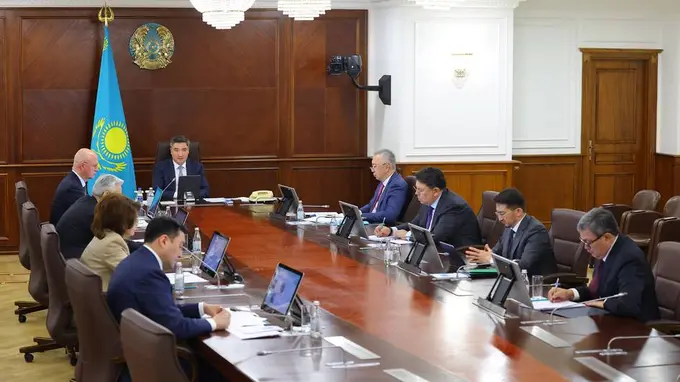
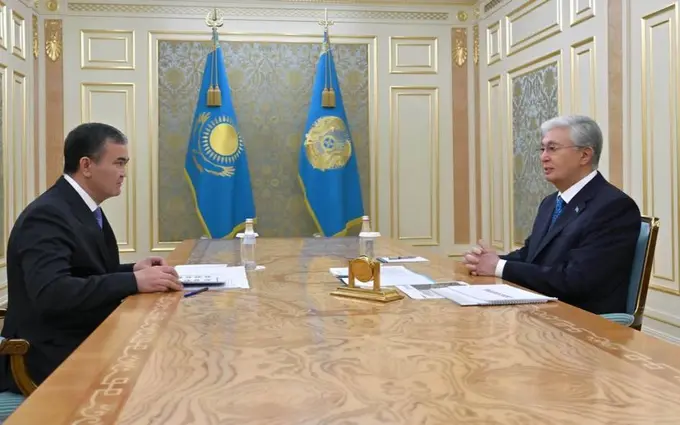
Kazakhstan's economy grew by 4.1% in the first half of 2026, President Kassym-Jomart Tokayev was told during a meeting with Prime Minister Olzhas Bektenov, as the government reported stronger investment, expanding industrial production and new large-scale infrastructure initiatives, Akorda reported.
According to the government, manufacturing output increased by 9.8% during the first six months of the year, while transport grew 7.1%, construction 15.2%, trade 5.7%, agriculture 4.4%, and communications services 4.3%.
Investment in fixed capital reached KZT 9.5 trillion ($17.4bn), with private investment increasing by 21.4%.
Bektenov said the government would commission 200 industrial investment projects worth KZT 1.7 trillion ($3.1bn) this year, creating approximately 17,000 jobs.
The prime minister also updated Tokayev on major transport infrastructure projects, including large highway developments, construction of a second airport in Astana, and the next phase of the Tarlan Astana transport system.
Housing commissioning is expected to reach 20mn square meters this year, while agricultural output is projected at KZT 15 trillion ($27.5bn), supported by cultivated land expanding to 23.8mn hectares.
The government allocated KZT 1 trillion ($1.8bn) to support farmers, with each budget tenge expected to attract 6.5 tenge in private investment.
Annual inflation stood at 10.3% in June, while the government reported that optimizing certain social payments would save more than KZT 800bn ($1.5bn) annually.
Heating season preparations and energy modernization
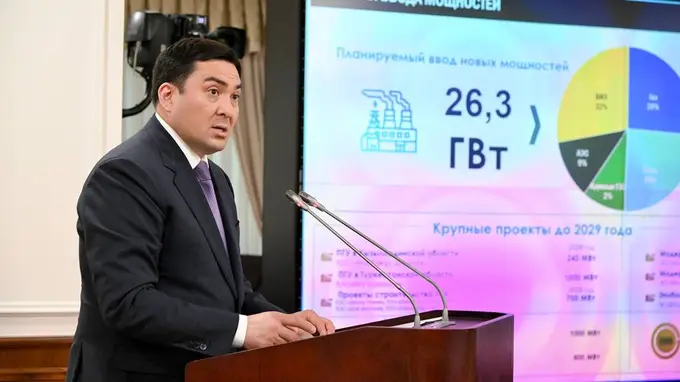
The meeting also focused on preparations for the upcoming heating season. Five thermal power plants have been removed from the critical risk category following last winter, while three additional plants have moved into the lowest-risk category.
This year, Kazakhstan plans to reconstruct nine power units, 55 boilers and 51 turbines, backed by KZT 384bn ($705mn) in funding. By the end of the year, repairs to 12,000 kilometers of utility networks are expected under the National Project for Modernization of the Energy and Utility Sectors.
Bektenov also briefed the president on digital transformation initiatives, including the Data Center Valley project. Developed in partnership with leading global technology companies, the project will create 250 megawatts of data center capacity and has attracted more than $10bn in foreign investment.
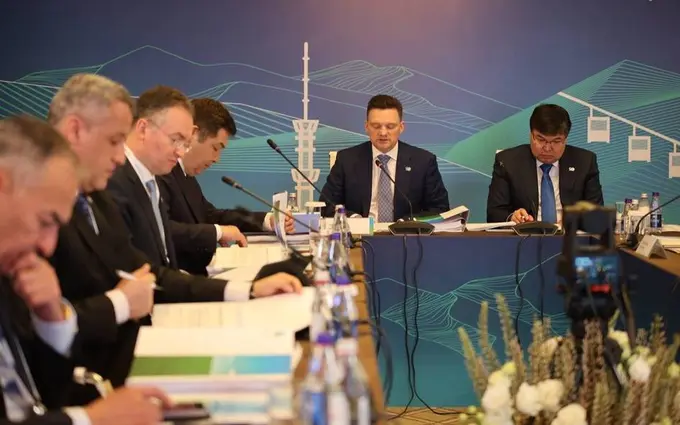
Tourism infrastructure was another focus of the meeting. Authorities expect the development of the Almaty mountain cluster to increase tourism's contribution to GDP. Construction of the Almaty SuperSki project is underway, with 60 kilometers of ski slopes planned and a daily capacity of 10,000 visitors. The resort is scheduled to open in December 2028.
Following the meeting, Tokayev instructed the government to continue implementing policies aimed at economic diversification and ordered the launch of a large-scale program to build social and infrastructure facilities nationwide, with particular emphasis on modern healthcare infrastructure.
Earlier, President Tokayev instructed the government to expand Kazakhstan's agricultural exports to $7.2bn this year while increasing food production and accelerating investment in livestock, veterinary services and digital agriculture.