Korean Youngone Corporation is working on new investment projects worth about $30mn in the Samarkand and Tashkent regions.
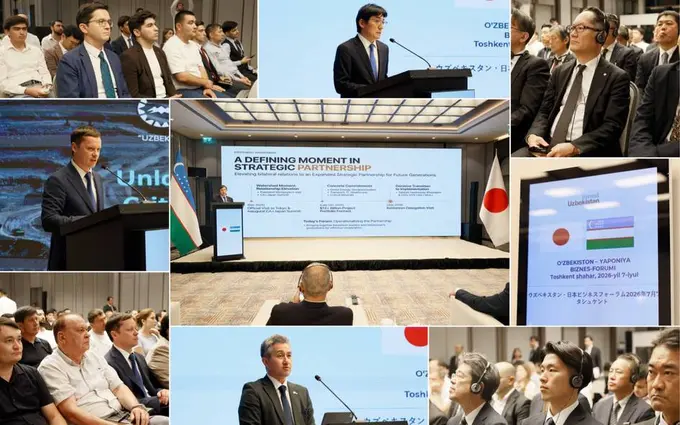
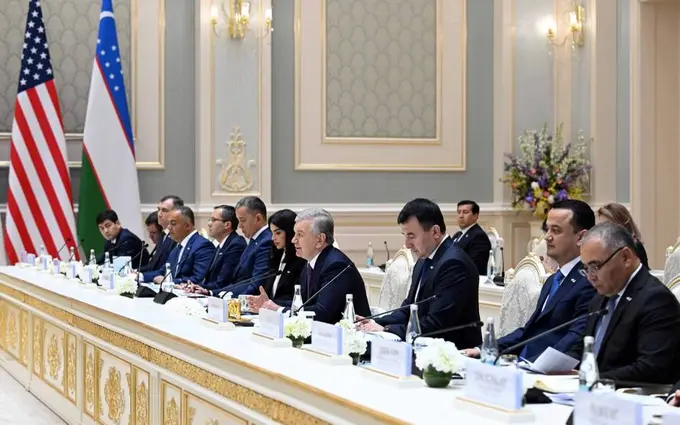
South Korea and Uzbekistan reaffirmed their commitment to expanding economic cooperation during the Korea–Uzbekistan Business Forum held on June 16 on the sidelines of the Tashkent International Investment Forum (TIIF). The event brought together senior government officials, business leaders and investors to explore new opportunities in infrastructure, aviation, manufacturing, textiles and digital technologies.
The forum took place amid intensifying diplomatic engagement between Seoul and Central Asia, as Tashkent also hosted the Second Meeting of Senior Officials preparing for the inaugural Summit of the Heads of State of the "Central Asia–Republic of Korea" format. Officials from both countries highlighted Uzbekistan's transformation into one of Central Asia's fastest-growing economies and an increasingly attractive destination for foreign investors, emphasizing the country's stable economic growth, young workforce and ambitious reform agenda as key drivers of international business interest.
Uzbekistan's Aviation Sector Emerges as a Regional Growth Leader
One of the central topics of discussion was the rapid development of Uzbekistan's aviation industry. Presenting on behalf of Incheon International Airport Corporation, Head of New Business Division Lee Sang-yeong described Uzbekistan as Central Asia's fastest-growing aviation hub. According to the presentation, total passenger traffic in Uzbekistan surged from 4.5mn in 2021 to 13.5mn in 2024, representing a remarkable 44.6% compound annual growth rate (CAGR).
Tashkent International Airport remains the country's primary gateway, handling nearly 8.7mn passengers in 2024, while Samarkand recorded the highest regional growth rate of 56.9% CAGR, underlining its growing importance as a tourism and transport hub. The growth has been driven by Uzbekistan's open skies policy, visa liberalization measures for citizens of around 90 countries, and a tourism boom that saw foreign visitor arrivals rise by 228% to 8.2mn people in 2024.

Presentations also highlighted Uzbekistan's strong economic fundamentals. The country's GDP reached $115bn in 2024, expanding by 6.5%, while foreign direct investment climbed to $11.9bn, a year-on-year increase of more than 50%.
Speaking at the forum, Ruxullo Zikrillayev, Deputy Director of the Agency for the Development of Light Industry of Uzbekistan, said the country's textile sector has undergone a profound transformation over the past decade.
Today, nearly 10,000 textile and light industry enterprises operate in Uzbekistan, generating more than $10bn in annual production. Exports have exceeded $4bn, reaching 75 countries worldwide.
"Uzbekistan has evolved from being a raw cotton exporter into a country with a full production cycle that processes its own cotton and exports finished products," Zikrillayev said.
More than 65% of the country's textile exports now consist of finished garments, home textiles and technical textile products, marking a significant shift toward higher value-added manufacturing.
To support the industry's continued growth, Uzbekistan established the Agency for the Development of Light Industry and a dedicated support fund last year. The government now offers low-interest loans, subsidies, support for international exhibitions and assistance in hiring foreign specialists and implementing international accounting standards.
Uzbek manufacturers are increasingly integrating into global supply chains and already produce goods for internationally recognized brands including Hugo Boss, The North Face, and LC Waikiki.

Youngone Expands Its Footprint in Uzbekistan
South Korean apparel giant Youngone Corporation, one of the world's leading garment manufacturers, reaffirmed its long-term commitment to Uzbekistan.
The company currently operates in Bangladesh, Vietnam, India, Ethiopia and Uzbekistan and plans to further expand into Africa and Central America. Park explained that Uzbekistan's strategic geographic location, proximity to major markets such as Russia, the CIS, Europe and Turkiye, and its strong cotton industry made it an attractive investment destination.
Uzbekistan produces approximately 620,000 tonnes of cotton annually, accounting for around 2.4% of global production, making it the world's eighth-largest cotton producer. Youngone plans to invest an additional $41.6mn over the next three years in Uzbekistan, focusing on vertically integrated textile production. Among its key projects is Samarkand Apparel LLC, where the company has already invested $15mn and employs around 1,200 people. The company plans to expand operations into knitting, dyeing and finishing.
Another major project, Buka Sportswear, has attracted $7mn in previous investments, with an additional $15.6mn planned for future expansion. The company also highlighted its commitment to corporate social responsibility through long-standing cooperation with Seoul National University, implementing educational and community programs in Samarkand since 1998.
IT Sector Positions Uzbekistan as a Digital Gateway Addressing participants, Nodirbek Berdikobilov, Director of IT Park Uzbekistan's Representative Office in South Korea, described Uzbekistan as an increasingly powerful business platform for international technology companies. He noted that the country offers a stable and open investment environment, a competitive talent pool and a strategic gateway for Korean companies seeking access to Central Asian and global markets.

Uzbekistan's population now exceeds 38mn people, with more than 60% under the age of 35, creating one of the region's youngest and fastest-growing labor markets.
According to Berdikobilov, the country currently has more than 300,000 IT professionals, over 500 IT education centers, and more than 220 higher education institutions.
The government has significantly increased investments in training specialists in artificial intelligence, data analytics, cybersecurity and game development. IT Park residents benefit from a highly attractive incentive package, including zero corporate profit tax, zero social tax and zero land tax, as well as VAT exemptions on imported IT services and support through the Zero Risk Programme, which provides office space and facilitates business establishment.
Uzbekistan's startup ecosystem is also expanding rapidly. More than 1,000 startups and 22 venture capital funds are currently active in the country, with the ecosystem's estimated value exceeding $4.3bn.
Today, more than 3,300 companies operate within IT Park Uzbekistan, including over 1,000 foreign firms, among them South Korean companies such as LG CNS. IT Park also maintains representative offices in Seoul, Berlin, Shanghai, Tokyo and Riyadh.
At the conclusion of the forum, a number of agreements and memorandums aimed at expanding cooperation were signed. In particular, a trilateral memorandum of cooperation was signed between the Ministry of Investments, Industry and Trade of the Republic of Uzbekistan, the Agency for the Development of the Pharmaceutical Industry of the Republic of Uzbekistan, and the Korea Overseas Infrastructure & Urban Development Corporation (KIND).
G2B and B2B meetings were also held within the forum, where discussions took place on investment projects, industrial cooperation, technology transfer, and new business initiatives