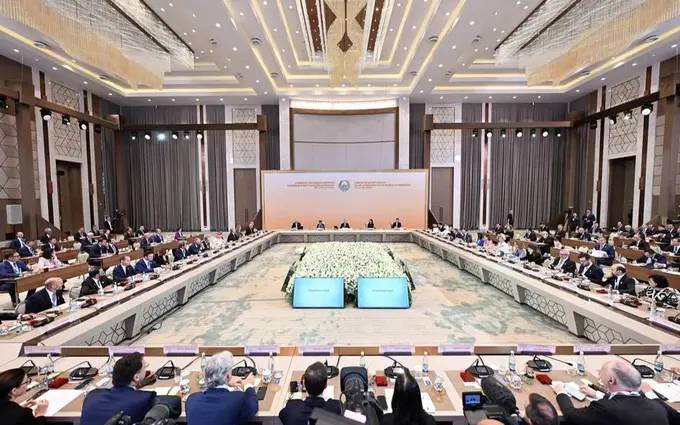
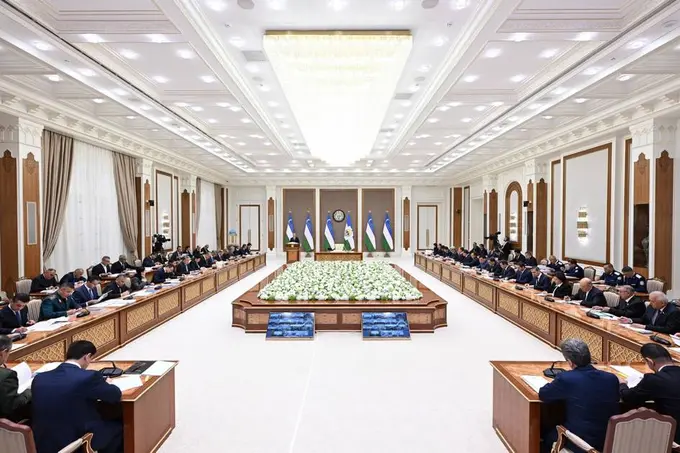
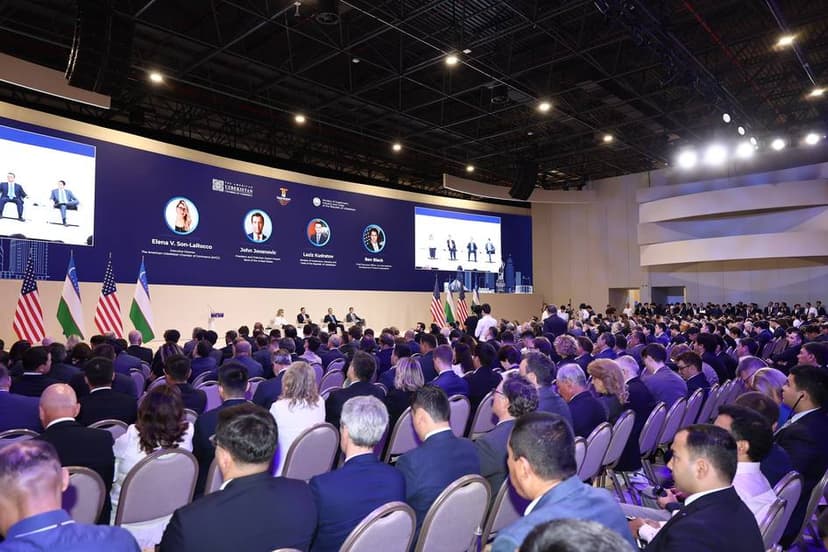
Record participation by 193 American companies at the American–Uzbek Business Forum highlighted deepening economic ties between Uzbekistan and the United States, as government officials and business leaders explored new opportunities in investment, critical minerals, advanced technologies, and industrial development.
The forum, held on June 16 as part of the fifth Tashkent International Investment Forum (TIIF), concluded with the signing of agreements spanning industry, energy, finance, aviation, geological exploration and digital infrastructure.
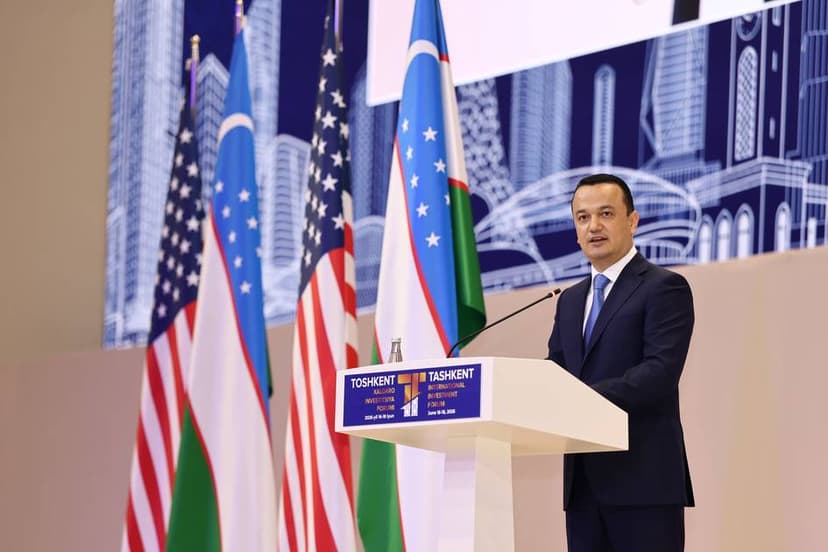
Opening the event, Minister of Investment, Industry and Trade Laziz Kudratov said the scale of participation reflected growing confidence among American companies in Uzbekistan's economic prospects.
"Today, 193 American companies are represented at the Tashkent International Investment Forum — this is an absolute record and the largest U.S. business delegation in the entire history of bilateral relations between our countries," Kudratov expressed. "This signals that American business views Uzbekistan not only as a market but also as a long-term investment partner."
Building on expanding economic cooperation
The forum builds on a series of recent initiatives aimed at strengthening economic cooperation between Uzbekistan and the United States.
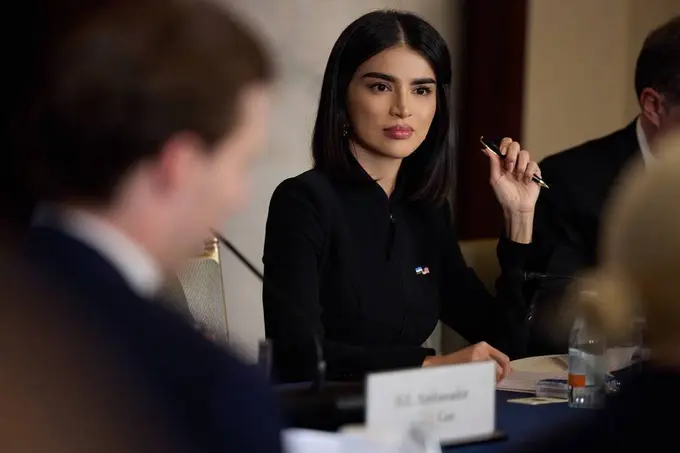
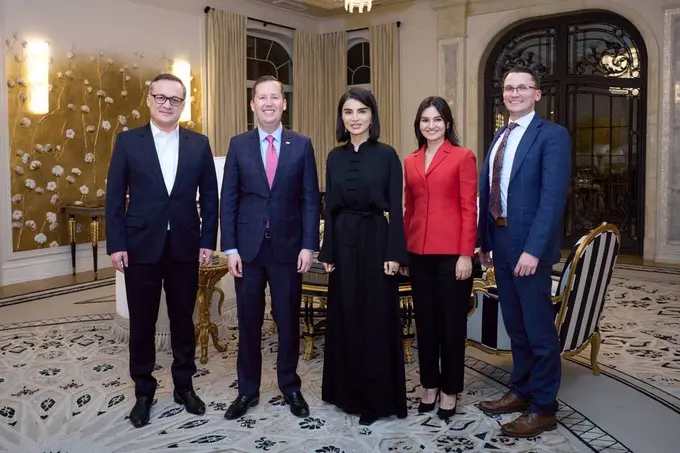
In November 2025, the two countries established the U.S.-Uzbekistan Business and Investment Council, a bilateral platform designed to facilitate trade, investment and private-sector cooperation. The council is co-chaired by Presidential Assistant Saida Mirziyoyeva and U.S. businessman Sergio Gor and serves as a mechanism for advancing commercial partnerships and attracting new investment projects.
The event also follows a series of meetings held by Mirziyoyeva in Washington in April, where discussions focused on expanding bilateral business ties and identifying new opportunities for investment and commercial cooperation. At the time, she noted that the council would serve as a platform for strengthening economic relations, while ongoing engagement at the presidential level would provide a foundation for broader cooperation.
According to officials associated with the council, its establishment came amid growing commercial engagement between the two countries. Since the C5+1 Leaders' Summit hosted in Washington in November 2025, Uzbekistan has concluded agreements with U.S. companies worth hundreds of millions of dollars.
Jeffrey Grieco, President and CEO of the US-Afghanistan Chamber of Commerce, said Uzbekistan's investment environment has undergone significant changes in recent years and is increasingly attracting the attention of American businesses.
"Uzbekistan of 10 years ago was totally different from Uzbekistan of today, and the Uzbekistan that we're going to see in the next 10 years will be incredible," Grieco noted, pointing to ongoing reforms and efforts to improve the investment climate.
He also highlighted the importance of a new investment framework expected to guide future cooperation between Uzbekistan and the United States by identifying priority sectors for investment and helping businesses better understand emerging opportunities.
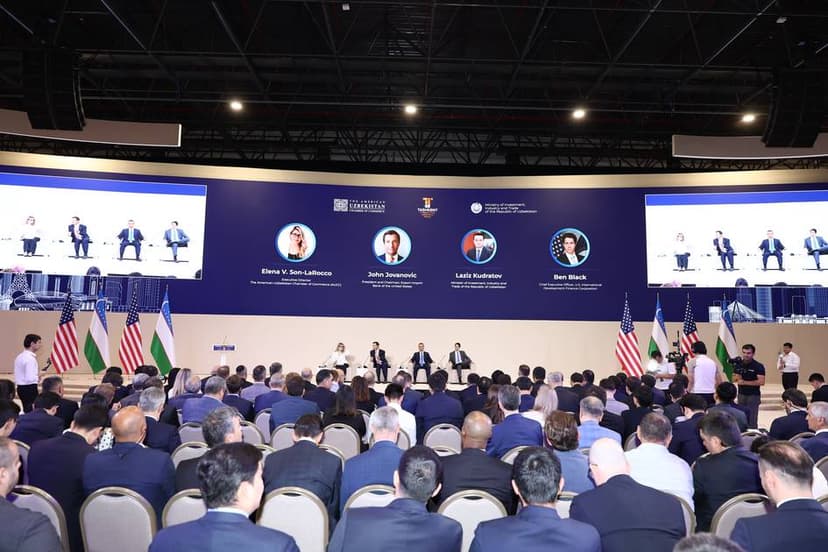
The forum's agenda included a high-level discussion titled "Innovation, Investment, and Jobs: New Horizons of U.S.-Uzbek Cooperation," which brought together representatives of the Uzbek government, leading US financial institutions and major American companies.
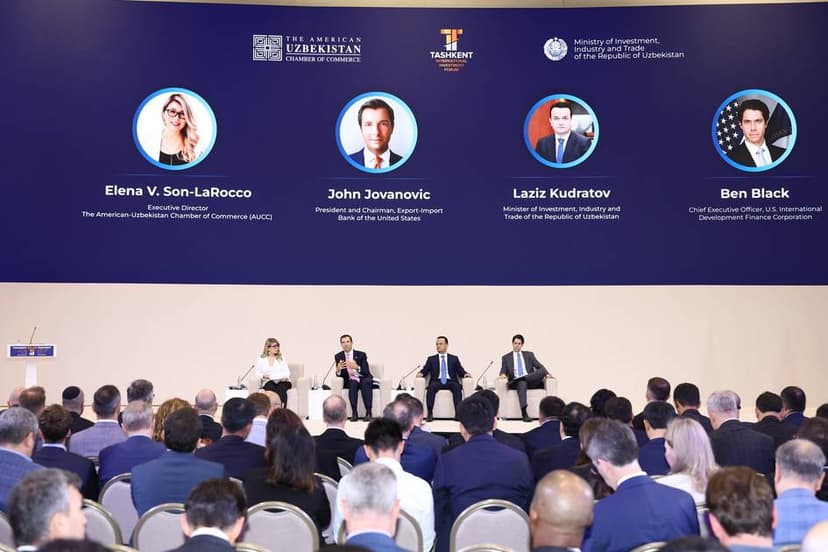
Ben Black, Chief Executive Officer of the U.S. International Development Finance Corporation (DFC), highlighted Central Asia's growing economic significance and Washington's interest in expanding long-term engagement in the region.
"Central Asia is a dynamically developing region with a population of over 100mn people. We see enormous potential in the region and are ready to engage with it more actively," Black stated.
John Jovanovic, President and Chairman of the Export-Import Bank of the United States (EXIM), noted that the bank's involvement would help facilitate the introduction of American technologies, equipment and services into Uzbekistan's private sector while strengthening the financial dimension of bilateral cooperation.
Critical minerals and industrial development
Critical minerals and advanced technologies featured prominently on the forum agenda, reflecting their growing importance in Uzbekistan-U.S. economic relations.
A dedicated panel discussion brought together executives from global companies operating in technology, financial services, mining, agriculture and aviation to exchange views on industrial modernization, technological innovation and long-term investment opportunities.
The discussions came shortly after Uzbekistan and the United States signed a memorandum of understanding on cooperation in the mining and processing of critical minerals and rare earth elements. Signed by Foreign Minister Bakhtiyor Saidov and U.S. Deputy Secretary of State Christopher Landau, the agreement establishes a framework for cooperation in extraction, processing, supply chain security, technology transfer and sustainable resource development.

Uzbek officials have increasingly positioned critical minerals as a strategic sector capable of attracting investment while supporting higher value-added industrial production and economic diversification.
Grieco noted that critical minerals have become a strategic priority for the United States and suggested that future cooperation should focus not only on extraction but also on developing processing capacity within Uzbekistan.
According to him, greater local processing would allow more value to be created domestically before materials enter international supply chains. He added that American companies could contribute technical expertise, technology and long-term investment to support the sector's development.
Peter Flanagan, Senior Vice President of FLSmidth, described mining as one of Uzbekistan's key economic growth drivers and pointed to ongoing modernization projects as an important factor attracting international partners.
He cited the launch of the MOF-3 copper beneficiation complex at Almalyk Mining and Metallurgical Combine as an example of the country's expanding industrial potential and modernization efforts.
The forum concluded with the signing of agreements covering industry, oil and gas, finance, aviation, geological exploration, satellite communications and digital infrastructure development.
Speaking about Uzbekistan's broader investment appeal, Grieco described the country as one of the region's most business-oriented economies and emphasized the importance of maintaining strong support for private-sector development.
He said continued efforts to improve transparency, regulatory predictability and investor confidence would help attract additional long-term investment and support Uzbekistan's economic growth objectives.
The United States remains among Uzbekistan's top 20 trading partners. Bilateral trade turnover reached approximately $1bn in 2025, following $1.02bn in 2024 and $765.1mn in 2023, reflecting continued growth in commercial exchanges between the two countries.