Inflation in Uzbekistan between 2018 and 2024 was driven by both demand- and supply-side factors, according to a study by the Central Bank’s Statistics and Research Department. The analysis shows that 49.3% of inflation was linked to demand factors, while 50.7% was associated with supply-side factors.
Uzbekistan has seen a shift toward stronger supply-side influence in recent years. In 2024, supply factors accounted for 68% of inflation, largely reflecting price increases in the services sector and adjustments to regulated prices.The study analysis shows that services inflation has been primarily supply-driven, while food inflation has been more closely linked to demand-side pressures. During the pandemic years, inflation was largely caused by supply chain disruptions, which constrained availability and pushed prices higher.
In 2022, price growth for key goods - including bread, meat, fuel, and other staples - was mainly driven by rising demand. In June 2022, annual inflation stood at 12.0%, with 10.3 percentage points attributed to demand factors. By contrast, by the end of 2023, inflation had eased to 8.8%, with demand-side factors contributing only 2.5 percentage points, indicating a moderation in demand-driven price pressures.
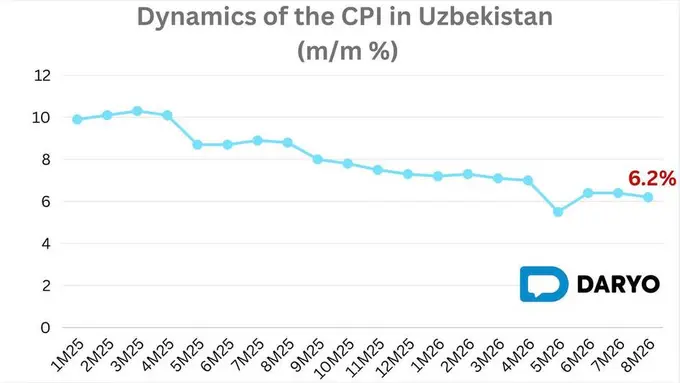
Recently, on December 11, The Board of Central Bank of Uzbekistan (CBU) had declared its decision to keep its key interest rate unchanged at 14%. Current macroeconomic conditions were shown as the reason for the decision. Annual inflation stood at 7.5% in November, with core inflation at 6.3%, while the bank revised its end-2025 inflation forecast down to 7.3% and projected inflation at around 6.5% in 2026.
The Central Bank noted that these findings are significant for shaping future monetary and economic policy, as understanding the balance between demand and supply factors is critical for designing effective measures to stabilize inflation and manage price dynamics in Uzbekistan.