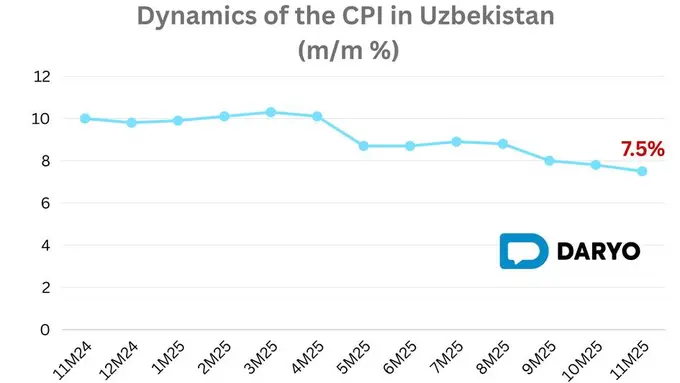
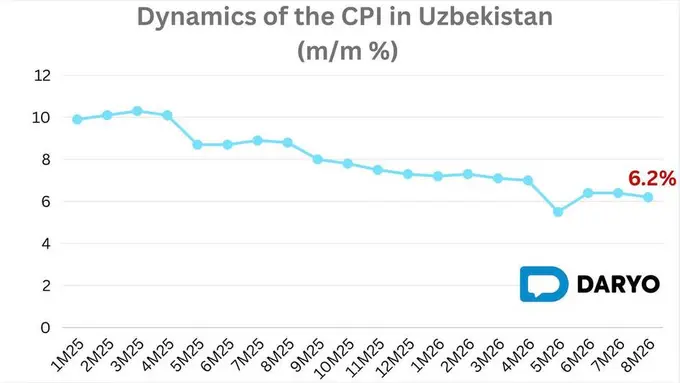
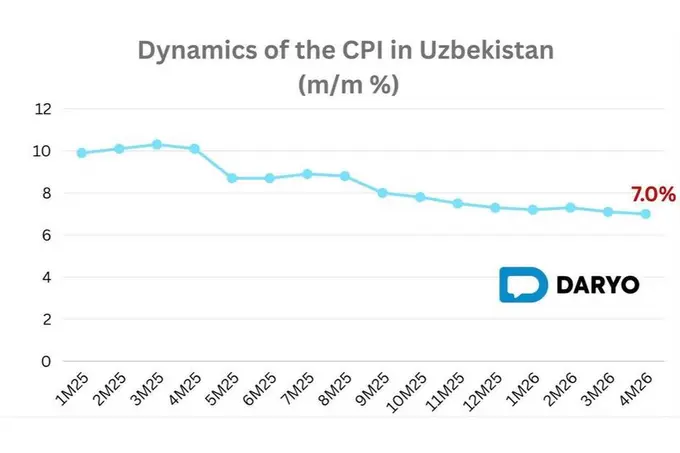
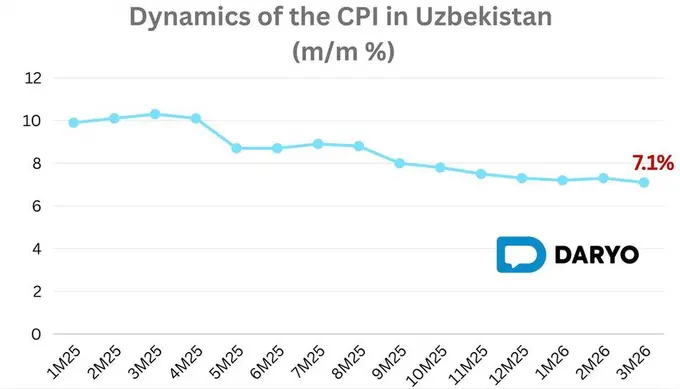
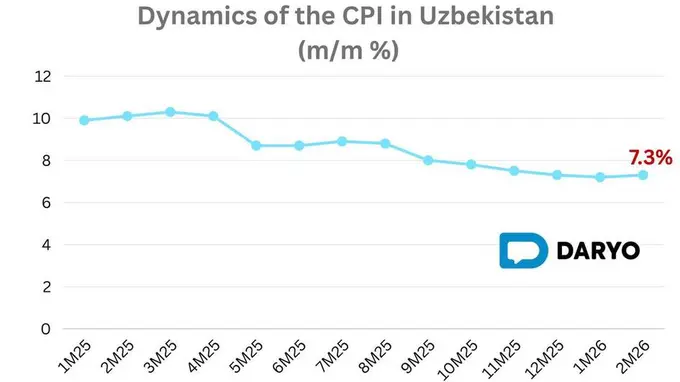
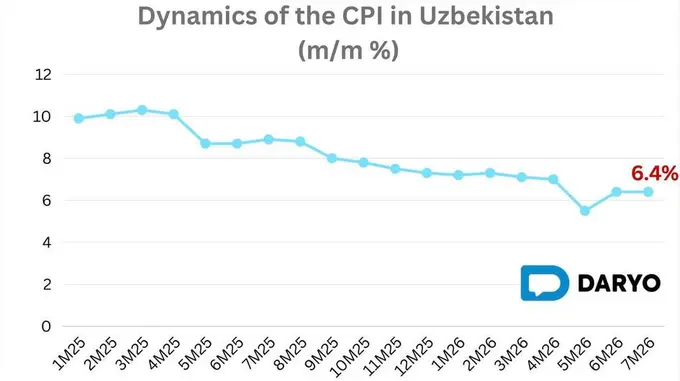
Uzbekistan’s annual inflation rate slowed to 8% in September 2025, down from 8.8% in August and 10.5% in September 2024, according to the Statistics Committee.
Over the past month, consumer prices rose by 0.6%, driven mainly by increases in basic food items, fuel, and healthcare services.
Egg prices climbed 6.5% in September, while poultry rose between 1.1 and 1.2%. Mutton increased by 1.5%, lean beef by 1.8%, and beef with bones by 1.7%. Year-on-year, mutton prices surged 26.8%, and beef with bones rose 23.2%.
Sugar prices were up 0.7%, while gasoline rose 1.4%, amounting to a 5.9% increase year-on-year. Healthcare costs also edged higher, with medicine prices up 0.2% and other services up 0.4%.
At the same time, seasonal produce helped offset inflationary pressures. Fruit and vegetable prices fell by 5.6%, with sharp declines recorded for tomatoes (–16.9%), bell peppers (–10.4%), melons (–5.5%), and grapes (–5.4%). Prices for carrots (–7.7%), onions (–3.6%), and apples (–1%) also declined.
Despite the slowdown, Uzbekistan remains far from its official inflation target. A 2019 presidential decree set a permanent target of 5% by 2023, but deadlines have since been postponed at least six times. The latest forecast expects the target to be reached in 2027, while the Ministry of Economy and Finance projects 2028.
On September 11, Central Bank Chairman Timur Ishmetov addressed the issue at a press conference in Tashkent. He cited monopolies, limited market liberalization, and structural inefficiencies as key obstacles.
“Our forecast is based on internal and external factors. But if this changes in life, it is natural that the forecast will also change,” Ishmetov said. “We are working with the government to strengthen competition in key commodities and reduce the impact of non-monetary factors. The effectiveness of these reforms will determine our results.”
Earlier this year, the Central Bank forecast inflation would fall to 7–8% by the end of 2025. However, Ishmetov has now revised the outlook, expecting 8.7% inflation by year-end.