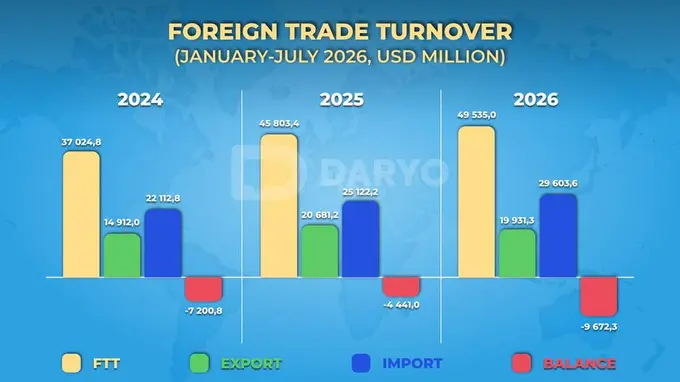
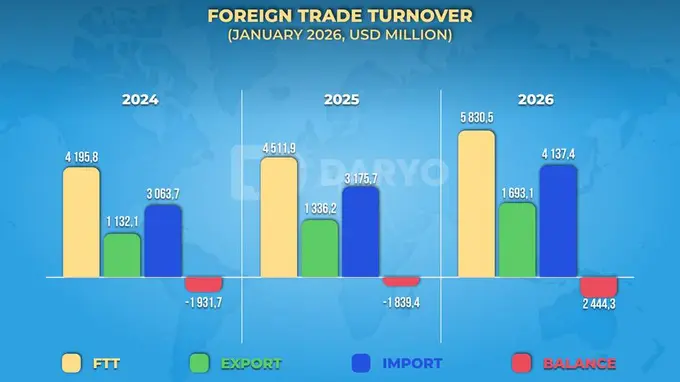
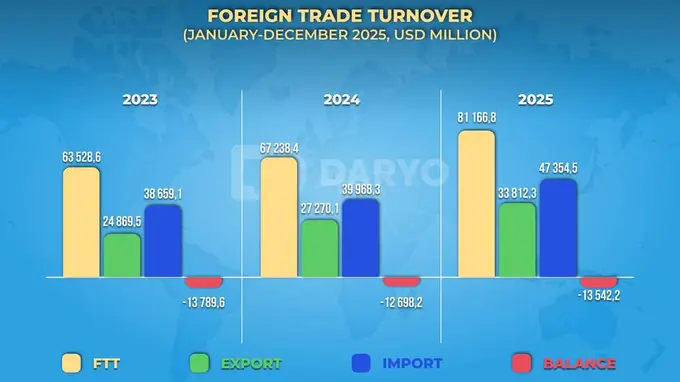
Uzbekistan’s foreign trade turnover reached $44.4bn in January–July 2025, marking a 19.9% increase compared with the same period in 2024. While China remains the country’s largest trading partner, the Commonwealth of Independent States (CIS) continues to account for a significant portion of Uzbekistan’s trade.
Collectively, the CIS partners listed in the report generated about $11.8bn in turnover, representing 26.5 % of the country’s total trade. Within this bloc, however, performance varied significantly, with some partners expanding their role while others saw declines.
Uzbekistan’s Role in the CIS
Uzbekistan is an active member of the CIS, a regional organization of former Soviet republics that promotes economic cooperation, cultural exchange, and regional security. The country participates in CIS summits and initiatives, reflecting its long-term commitment to integration.
Over the past five years, Uzbekistan’s trade with CIS members has nearly doubled, exceeding $23bn by the end of 2024. More than 5,500 companies with capital from CIS states now operate successfully across Uzbekistan’s regions, strengthening the country’s ties with its neighbors.
Trade Performance Across CIS Partners
Russia strengthened its position as Uzbekistan’s leading CIS partner and second-largest overall after China. Bilateral trade turnover with Moscow reached $7.16bn in the first seven months of 2025, compared with $6.84bn a year earlier. This growth brought Russia’s share to 16.1% of Uzbekistan’s total trade, underlining its role as both a key export destination and an important source of imports. Despite external pressures such as sanctions and shifting supply chains, Russia continues to be a resilient anchor in Uzbekistan’s regional trade structure.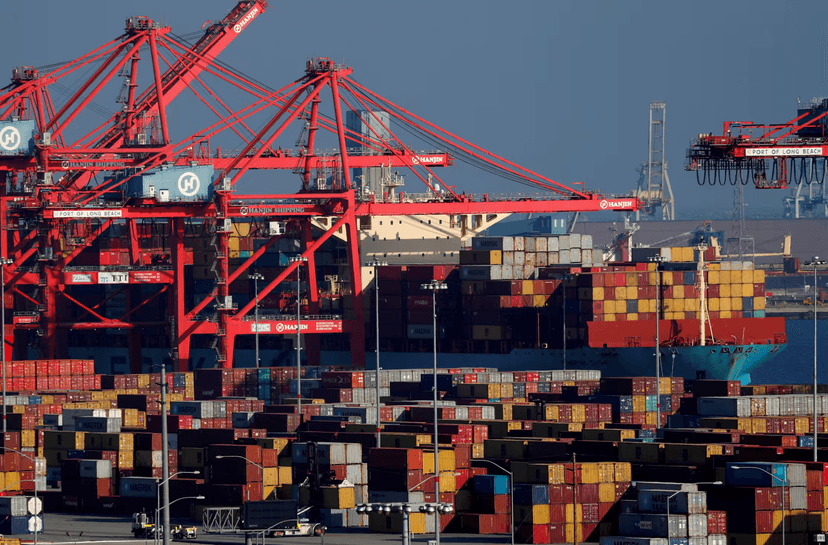
Kazakhstan followed as the third-largest partner overall and the second within the CIS. Turnover reached $2.64bn, up from $2.27bn in 2024. This represented 5.9% of Uzbekistan’s total trade. The partnership with Kazakhstan remains structurally important, reflecting strong cross-border supply chains and cooperation in energy, agriculture, and manufactured goods. Growth has been steady rather than dramatic, but Kazakhstan maintains its role as one of Tashkent’s most reliable economic partners.
By contrast, Turkmenistan saw a sharp decline in trade volumes. Turnover fell to $586.6mn, down from $757.0mn in 2024, representing a contraction of nearly 23%. This drop highlights the volatility of trade flows with Ashgabat, which are heavily tied to energy exports and a limited set of goods. Although Turkmenistan remains a notable partner, its trade relationship with Uzbekistan appears more vulnerable to external shocks and fluctuating demand.
Belarus emerged as one of the fastest-growing partners in 2025. Trade between the two countries expanded to $492.6mn, up from $383.7mn a year earlier. This represented growth of 28%, one of the highest among CIS members. Belarus has carved out a stronger role in supplying machinery, industrial products, and food, reflecting the deepening of industrial and commercial ties between the two states.
The Kyrgyz Republic showed signs of recovery after a period of decline. Turnover rose to $504.7mn, compared with $466.2mn in 2024. While the figure remains below the $623.2mn peak recorded in 2023, the rebound indicates renewed momentum in bilateral trade. Uzbekistan’s exports of textiles, agricultural products, and machinery remain important drivers, though trade with Kyrgyzstan continues to be affected by logistical constraints and regional price volatility.
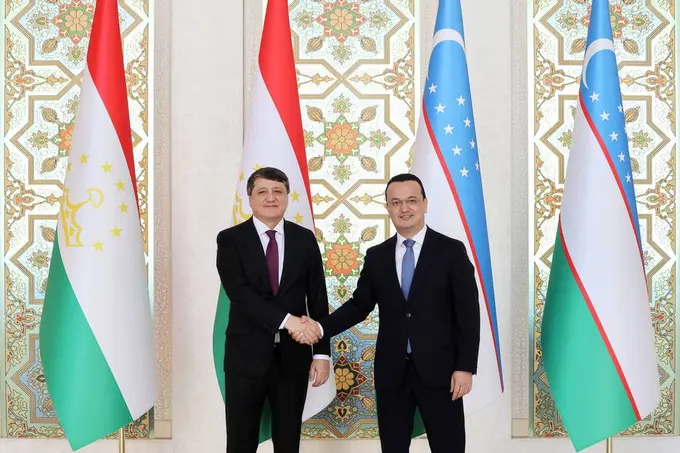
Tajikistan recorded more modest growth, with turnover rising to $391.4mn from $372.6mn in the same period last year. Although the scale remains relatively small, the relationship is supported by exchanges in energy, agriculture, and consumer goods. This steady yet limited expansion reflects Tajikistan’s smaller economic base and structural trade challenges.
It is worth noting that the official statistics report lists only six CIS partners—Russia, Kazakhstan, Kyrgyzstan, Belarus, Tajikistan, and Turkmenistan—as major trading countries. Other CIS members such as Armenia, Azerbaijan, and Moldova are not included, likely because their volumes fall below the threshold of the major partners table.
This means that the $11.8bn figure is a partial CIS total. If trade with these smaller members were added, the bloc’s share of Uzbekistan’s trade would be slightly higher, closer to 27–28%. Nonetheless, the data highlights that Russia and Kazakhstan overwhelmingly dominate Uzbekistan’s CIS trade, while smaller states provide additional, though less stable, contributions.
Earlier in 2024, Uzbekistan’s trade turnover with CIS members amounted to $6.9bn in the first four months of the year. Of this, exports accounted for $2.4bn, while imports stood at $4.5bn. These figures stressed the importance of Uzbekistan’s engagement with its regional neighbors, reflecting the mutual benefits derived from cross-border commerce.
Transport Routes in Intra-CIS Trade: Rail, Road, Water, and Air
Trade between CIS countries relies primarily on land routes, making rail and road transport the backbone of intra-regional commerce. The extensive Soviet-era railway network, which still uses a common track gauge, allows for smooth movement of bulk goods such as oil, gas, coal, metals, fertilizers, and grain across borders. Rail corridors connecting Russia, Kazakhstan, and Belarus are the busiest, while Central Asian states like Uzbekistan, Kyrgyzstan, and Tajikistan depend on Kazakhstan’s rail infrastructure for access to one another and to Russia.
Road transport is also vital, especially for shorter distances and perishable goods such as fruits, vegetables, dairy, and textiles. Trucks carry much of this trade, for example, Uzbek produce heading to Kazakhstan and Russia, or Kyrgyz and Tajik exports moving through mountain passes to their neighbors.
Water transport plays a smaller role but remains important for countries bordering the Caspian Sea. Kazakhstan, Turkmenistan, Russia, and Azerbaijan use ferries and ships to move oil products, grain, and machinery across the sea, linking their economies more efficiently. Russia’s river systems, particularly the Volga-Don corridor, also provide inland access for trade with Kazakhstan.
Air transport, meanwhile, accounts for only a minor share of intra-CIS trade but is used for high-value or time-sensitive shipments such as electronics, pharmaceuticals, and express cargo between major hubs like Moscow, Almaty, Tashkent, and Baku. Overall, land transport dominates intra-CIS trade flows, with rail serving heavy industries and bulk goods, and road transport ensuring the steady exchange of consumer and agricultural products across borders.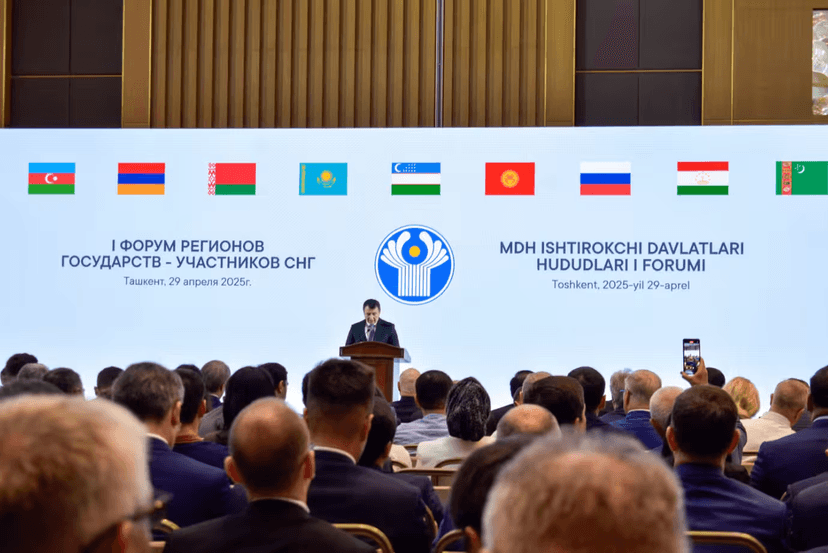
Beyond Trade: Regional Integration and Connectivity
Beyond trade statistics, Uzbekistan has pursued initiatives to institutionalize regional cooperation within the CIS framework. On April 29, 2025, Tashkent hosted the First Forum of Regions of the CIS Member States at the initiative of President Shavkat Mirziyoyev.
The event brought together delegations from across the bloc, including CIS Executive Committee officials. A highlight of the forum was the ceremonial exchange of over ten interregional cooperation agreements. Three thematic panel sessions addressed economic cooperation, humanitarian engagement, and the role of chambers of commerce in building a unified CIS economic space. The forum concluded with bilateral consultations between regional authorities and businesses, strengthening practical cooperation on the ground.
Uzbekistan’s growing role in the CIS is also reflected in aviation. As of May 2025, the country ranked among the top three CIS members in terms of the number of airlines and aircraft. With 12 active carriers, Uzbekistan stood in second place by airline count and third by fleet size, operating 93 aircraft. This expanding aviation capacity demonstrates the country’s ambition to become a regional transport hub, facilitating not only passenger flows but also the logistics that underpin trade across the CIS.
When viewed together, Uzbekistan’s trade with CIS members demonstrates a mix of growth and adjustment. Russia and Kazakhstan dominate the picture, accounting for nearly $9.8bn or almost 87% of Uzbekistan’s trade with the bloc. Smaller states such as Kyrgyzstan, Tajikistan, Turkmenistan, and Belarus add diversity but remain more vulnerable to fluctuations. Among them, Belarus stood out in 2025 with rapid expansion, while Turkmenistan experienced the steepest contraction.
The CIS remains a cornerstone of Uzbekistan’s trade network, even as the country expands ties with China, Turkey, the European Union, and South Korea. The region provides both stability and volatility: Russia and Kazakhstan ensure consistent volumes, while the smaller states highlight opportunities for niche trade and industrial cooperation. With forums, joint projects, and growing sectors like aviation reinforcing integration, Uzbekistan is cementing its role as both a connector and a driver of economic activity across the CIS.
Follow Daryo's official Instagram, LinkedIn, and Twitter pages to keep current on world news