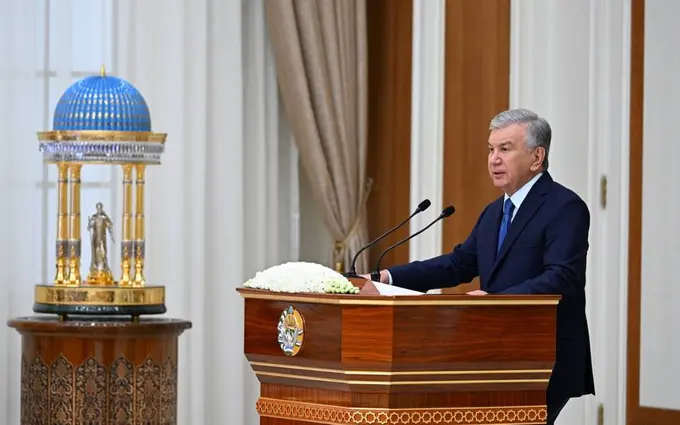
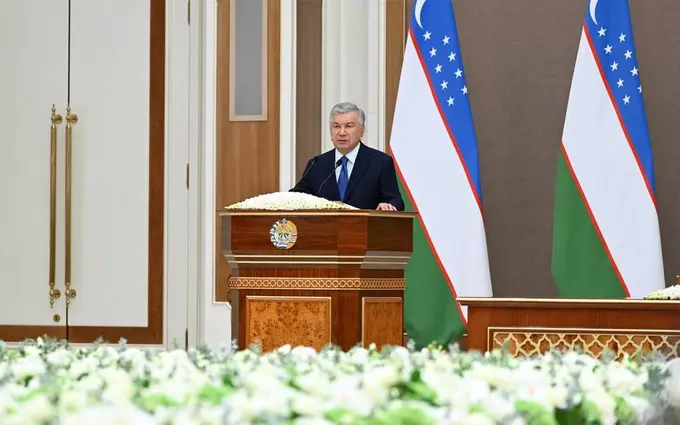
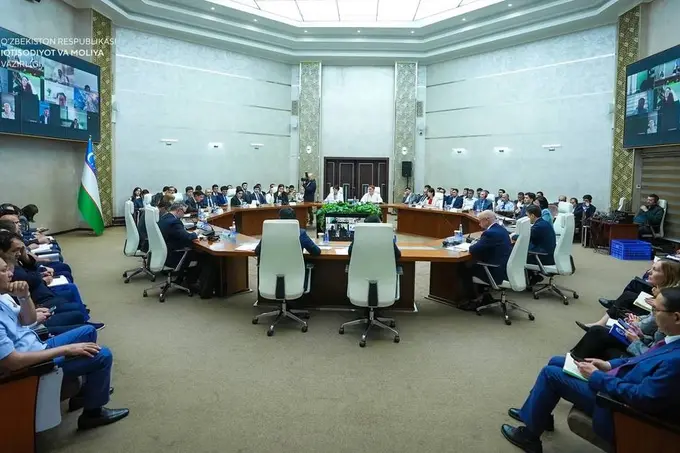
Uzbekistan’s President Shavkat Mirziyoyev has criticized some regional officials for failing to effectively use available resources to create jobs, as 15,000 of 86,000 small businesses established over the past year have stopped operating and 62,000 borrowers are struggling to repay their loans during the meeting to discuss taking poverty reduction and household income growth to a new stage.
Mirziyoyev said some regional leaders lack the knowledge or capacity to use available resources effectively and create jobs for the population. He also criticized officials for failing to understand rapid changes and fluctuations in the modern economy. Over the past year, 86,000 small enterprises have been established across Uzbekistan, but 15,000, or 17%, have since ceased operations.
The meeting also noted that 62,000 people who received bank loans to start or expand businesses are now experiencing difficulties repaying them. According to the discussion, one of the main reasons for these problems is the limited use of a “project-based approach” among mahalla assistants and mahalla bankers. Only officials in around 1,000 mahallas were said to have mastered this approach.
The project-development skills of mahalla bankers and assistants to district and city mayors were therefore critically assessed at the meeting. It was noted that many of them do not adequately understand which individuals need credit or which projects could be financed through leasing, factoring, guarantees, insurance, working capital or contractual financing.
Officials were also criticized for continuing to begin discussions with entrepreneurs by asking whether they have collateral, rather than first assessing the viability and financing needs of their projects. The meeting highlighted that bureaucratic barriers to obtaining loans remain in place, while loan repayment schedules are not always aligned with the nature of the business.
The president stressed the need to tailor repayment periods to the specific characteristics of farming, trade and other business activities. It was also decided to transfer authority over managing preferential credit resources for family and youth entrepreneurship to district headquarters.

Khorezm case
As part of the presidential instruction, leaders of the economic sector remained in Khorezm to analyze how the region’s poverty-reduction system could be changed.
Over a two-week period, officials examined the situation of 81,000 people from low-income households, representing 19,000 families. The review identified 12,000 unemployed people and 10,000 low-income residents among these households. At the same time, businesses in Khorezm are currently looking for around 4,000 workers in construction, 3,000 in services and 2,500 in industry.
Officials were instructed to use these vacancies to train unemployed and low-income residents in the skills demanded by businesses and help them secure employment. The meeting noted that using existing vacancies and vocational training opportunities could increase the incomes of 10,000–15,000 people from low-income families.
The review also found 48,000 children in the low-income families studied in Khorezm. However, officials currently lack a dedicated program to work individually with these young people and involve them in vocational training from an early age. Each district in the region has at least one or two technical colleges and four or five training centers, providing a basis for expanding such programs. Youth leaders, mahalla assistants and women's affairs activists were instructed to organize additional clubs for children from low-income families at schools, technical colleges and training centers.

More than 10,000 women from low-income families in Khorezm are currently occupied with childcare. The preschool enrollment rate among children from such families is below 75%, limiting the ability of women to participate in income-generating work.
The meeting also identified opportunities to provide 646 college and university students with vocational skills through dual education based on the needs of new projects being implemented in the region. In addition, stronger social support for 526 people of retirement age or with disabilities from low-income families could allow family members currently engaged in their care to participate in income-generating employment.
New poverty-reduction system
The analysis conducted in Khorezm was described as applicable to other regions, with the government deciding to introduce a fundamentally new system for working with poverty.
Under the new approach, officials responsible for the “Mahalla Seven,” regional and district mayors, and banks will move to an intensified working regime.
Headquarters will be established in every region and district under the leadership of the respective mayor. Banks and employment-support agencies will assist these headquarters in resolving issues at the local level. Regional, district and city mayors, together with the entire economic sector, will spend three days a week exclusively addressing poverty and employment issues.