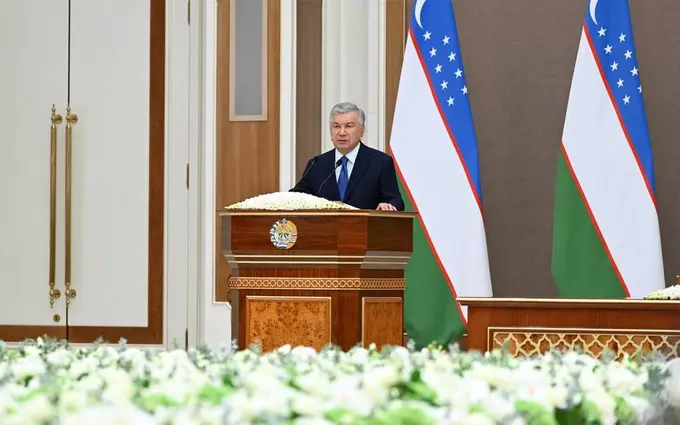
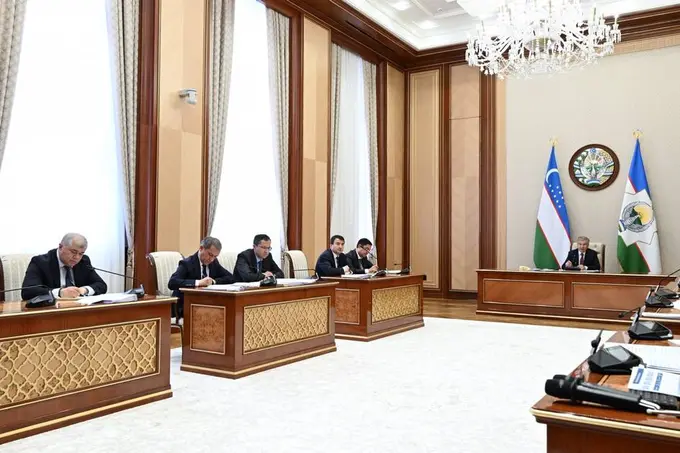
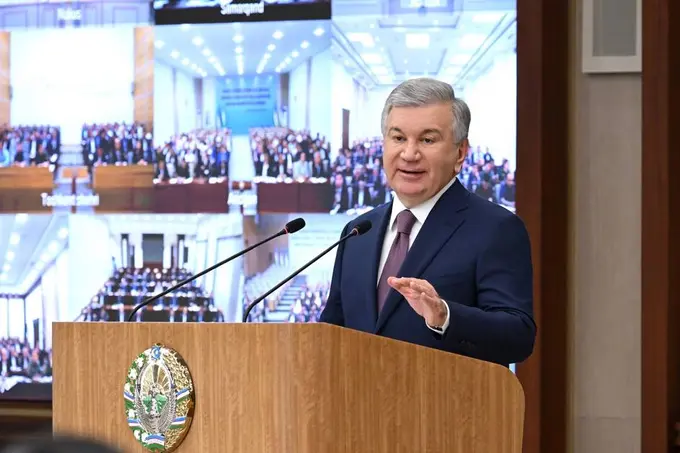
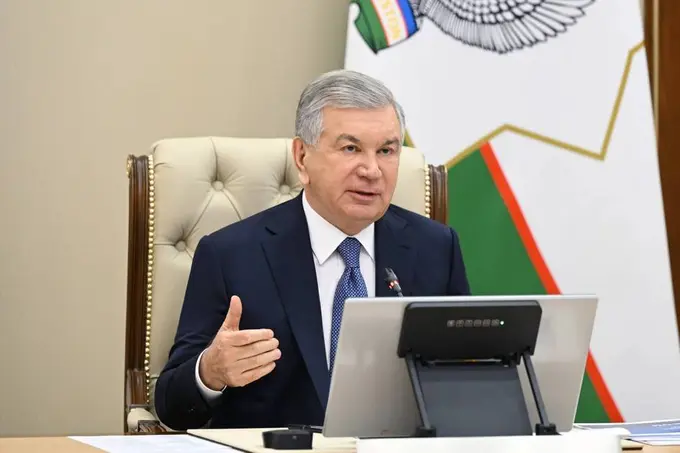
Despite Uzbekistan's industrial output growing by an average of 6.3% annually over the past nine years, growth in the chemical industry has remained below 3%, prompting the government to accelerate reforms and investment in the sector. These issues were discussed during a meeting chaired by President Shavkat Mirziyoyev on June 2, which focused on the development of the chemical industry and the implementation of new investment projects across the country's regions.
It was noted that Uzbekistan’s economy continues to develop dynamically, with industrial sectors launching the production of 3,000 new products in recent years. Officials highlighted that just 9–10 years ago, the chemical industry was largely limited to the production of mineral fertilizers.
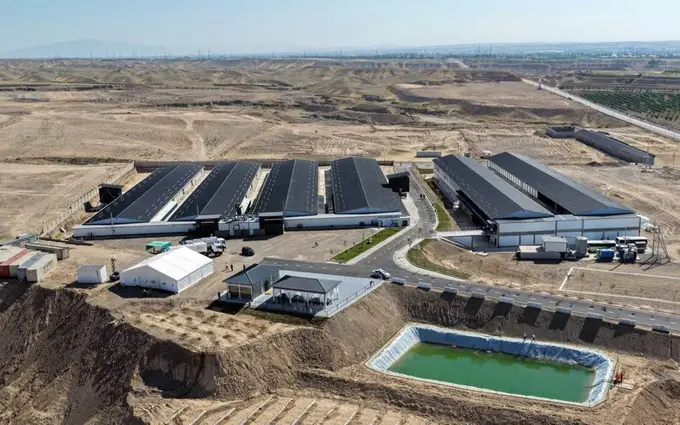
Since then, the sector has attracted $8.3bn in investment, resulting in the commissioning of 87 major production facilities. More than 60 new high-value-added products have been introduced, including PVC, green hydrogen, expanded polypropylene, and BOPP film. According to the meeting, these developments have created a raw material base for the production of thousands of new products across various sectors of the economy.
As a result, chemical industry exports have tripled, while employment in the sector has surpassed 50,000 people.
Despite this progress, the president noted that significant untapped potential remains. Over the past nine years, industrial output across Uzbekistan increased by an average of 6.3% annually, while growth in the chemical industry remained below 3%. At the same time, imports of chemical products increased fourfold, reaching $4.5bn annually.

Mirziyoyev also noted that Uzkimyosanoat remains focused primarily on large enterprises within its system, while more than 5,000 companies operating across the industry receive insufficient attention. According to the president, the challenges and proposals of these enterprises are not being systematically studied.
A key focus of the meeting was restructuring production, increasing value-added output, and reducing energy consumption.
Officials reported that Uzbekistan currently produces 1.5mn tons of ammonium nitrate annually, consuming 1.07bn cubic meters of natural gas. At the same time, many developed countries are reducing ammonium nitrate consumption in favor of urea and water-soluble fertilizers in agriculture and porous prill ammonium nitrate in the mining industry.
The president noted that porous prill ammonium nitrate can be produced at the same cost as conventional ammonium nitrate while generating twice as much value-added output. Officials and enterprise managers were instructed to consider expanding projects in this area.
The meeting also reviewed opportunities for deeper processing of chemical products. It was noted that cyanide salts produced by Navoiazot and valued at approximately $3,700 per ton can be used to manufacture adhesive products worth up to $8,000 per ton. Responsible officials were instructed to begin implementing 10 low-tonnage chemical projects with a total value of $1bn in the industrial cluster surrounding Navoiazot.
The president emphasized the importance of utilizing existing mineral reserves more effectively.
According to the data presented, Karakalpakstan and the Surkhandarya, Kashkadarya, and Navoi regions possess reserves of 550mn tons of sodium and potassium resources, as well as 20mn tons of bentonite. Officials stated that deep processing of these resources and the production of caustic soda could triple value-added output.
Attention was also given to serpentinite deposits. Jizzakh region has identified serpentinite reserves of 1.5mn tons, while Karakalpakstan possesses an additional 500,000 tons. Officials noted that processing serpentinite with sulfuric acid enables the production of magnesium oxide valued at up to $5,000 per ton. Further processing could also support the production of nickel, chromium, and cobalt, which are important raw materials for the electrical engineering sector.
Responsible agencies were instructed to prepare and begin implementing a three-year program aimed at doubling reserves of key raw materials required by the chemical industry, including phosphorite, halite, mirabilite, and serpentinite. In the serpentinite segment alone, the task was set to launch projects worth at least $200mn.
The meeting also reviewed opportunities in the household chemicals sector. Officials reported that Uzbekistan imports approximately $300mn worth of household chemical products each year, while the regional market for these products is estimated at $2bn.
An example highlighted during the meeting was an enterprise operating in the Angren Free Economic Zone that established cooperation with the international company Henkel. According to officials, the enterprise was subsequently acquired by the company and now plans to export products manufactured in Uzbekistan to Commonwealth countries.
To encourage similar projects, dedicated production sites will be allocated within one of Tashkent’s industrial zones. A total of $50mn will be directed toward these projects, with the condition that completed enterprises and their brands will eventually be sold to private investors as operating businesses.
For similar initiatives in other regions, an additional $15mn will be allocated through the Industrial Cooperation Fund.
Overall, responsible officials were instructed to develop a program for launching at least 100 new branded products in the household chemicals sector.
The meeting also focused on opportunities in the mineral fertilizer market. According to officials, global demand for mineral fertilizers is increasing by approximately 5% annually and is expected to exceed $260 billion by 2030. Demand for water-soluble fertilizers is growing particularly rapidly as new agricultural technologies are adopted worldwide.
To capitalize on these trends, responsible officials and regional governors were tasked with implementing 42 projects worth a combined $2.8bn over the next three years.
As a result of these projects, annual nitrogen fertilizer production is expected to increase from 2.8mn tons to 4mn tons, phosphate fertilizer production from 400,000 tons to 900,000 tons, and water-soluble fertilizer production from 100,000 tons to 400,000 tons by 2030.
Officials also noted that major projects involving water-soluble fertilizers, polymers, household chemicals, and inorganic chemicals will increase demand for specialists in advanced fields such as nanochemistry, green chemistry, supramolecular chemistry, and AI-based chemical modeling.
To address these needs, a comprehensive system integrating education, scientific research, laboratories, and startups will be created for the chemical industry.
A scientific, industrial, and educational cluster dedicated to chemical technologies will be established on a 60-hectare site in Tashkent’s Mirzo Ulugbek district. Within the cluster, a Chemical Technology Innovation Center will be created in cooperation with South Korea.
The center will reimburse up to 50% of costs associated with pilot and experimental projects.
During the meeting, responsible officials were instructed to develop and begin implementing a broader program covering more than 350 chemical industry projects with a combined value of $17bn.
The president emphasized that achieving these targets will require modern and science-based management approaches. In this regard, officials were instructed to continue the transformation of Uzkimyosanoat.
The meeting concluded with reports from responsible officials and regional leaders, followed by discussions with representatives of chemical industry enterprises regarding the implementation of the planned reforms and investment projects.