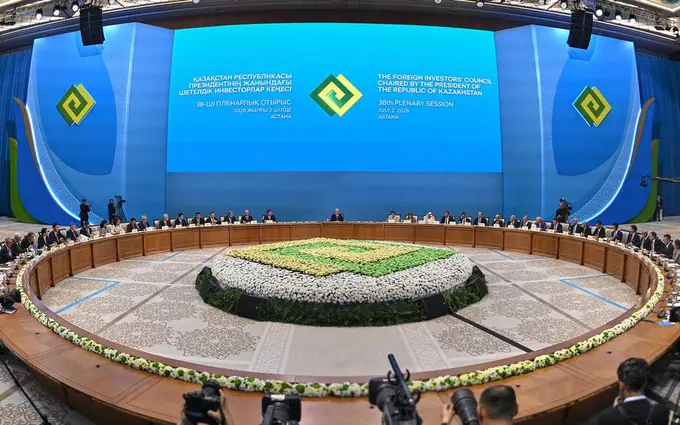
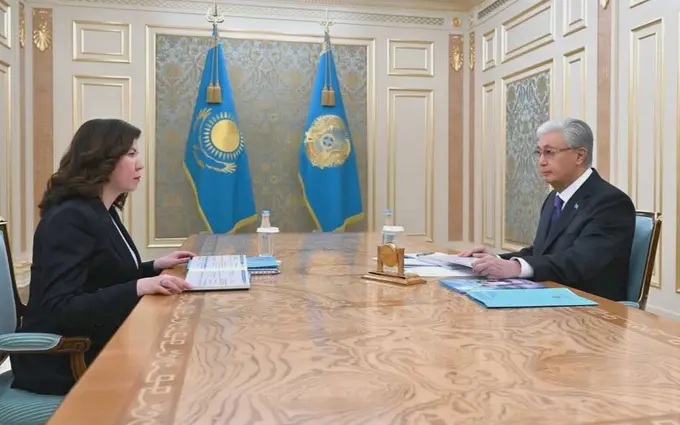
Kazakh President Kassym-Jomart Tokayev called for stronger cooperation on artificial intelligence across the Eurasian Economic Union (EAEU), saying digital technologies should become a practical tool for trade, logistics and long-term economic growth across the bloc.
Speaking at the plenary session of the 5th Eurasian Economic Forum titled “EAEU in the global digital race: betting on artificial intelligence,” Tokayev said the rapid development of AI is becoming a defining factor in the global economy and creating new strategic challenges for governments and businesses.
“We see how the rapid development of artificial intelligence technologies has already become a fundamental factor in the global economy,” Tokayev stated. “The key issue is whether we will be able to use digital technologies as an effective instrument for accelerated economic and social development.”
Tokayev described the EAEU as not only a regional integration bloc but also an important participant in the global economy, adding that coordinated action is becoming increasingly important amid geopolitical uncertainty and major shifts in global trade.

He pointed to international estimates suggesting AI could add around $7tn to global GDP over the next decade while reshaping labor markets and education systems worldwide.
Against that backdrop, Kazakhstan proposed broader practical use of AI to strengthen the EAEU’s “four freedoms” — the movement of goods, services, capital and labor — and improve competitiveness among member states.
Tokayev said Kazakhstan has made digital transformation a national priority and declared 2026 the Year of Artificial Intelligence and Digital Development.
He highlighted steps already underway, including the launch of two supercomputers based on NVIDIA technologies, plans to develop a “data center valley,” and expanded education and innovation initiatives through the Alem.ai international center.

According to Tokayev, Kazakhstan is also ready to cooperate with EAEU partners on digital customs systems, AI-powered logistics and trade platforms, mutual recognition of digital signatures and stronger industrial coordination.
“New technologies should not become a source of digital divides between EAEU member states,” Tokayev stressed. “On the contrary, they must become a tool of economic interconnection and a powerful synergy for cooperation between our countries.”
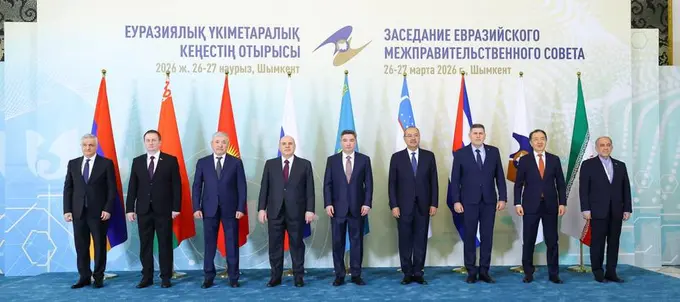
At the forum, EAEU leaders also adopted a joint statement on the responsible development of artificial intelligence, an initiative first proposed by Tokayev in December 2025.
The document outlines common approaches to digitalizing key sectors of the economy and aims to support safe implementation of AI technologies while strengthening cooperation across the union.