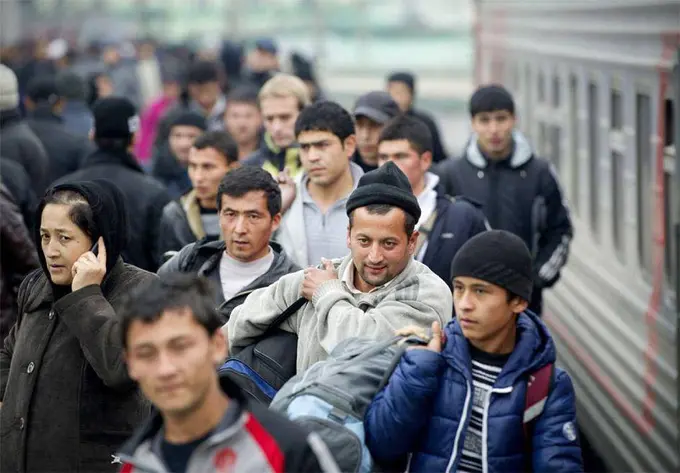
The number of labor migrants from Central Asia moving to Poland has been increasing, with Uzbek citizens leading the trend as more workers seek opportunities outside Russia, reported EADaily.
According to Marta Jaroszewicz, a researcher at the Migration Research Center of the University of Warsaw, Poland is becoming a more popular destination for migrants from the region, many of whom had previously worked in Russia.
Most migrants arrive in Poland for employment, though a significant number also come to study.
Jaroszewicz said the overall number of migrants in Poland continues to grow.
The largest group remains Ukrainian citizens, estimated at 1.5mn to 2mn people, followed by around 150,000 Belarusian citizens. Poland has also seen visible migrant communities from Moldova and Georgia.
At present, up to 30,000 migrants from Central Asia are estimated to be living in Poland. Uzbek citizens make up the largest group, followed by migrants from Kazakhstan, Kyrgyzstan and Tajikistan.
In the first quarter of 2026, Poland issued nearly 16,000 work permits to Uzbek citizens. Kazakh citizens received 12,000 permits, Kyrgyz citizens nearly 8,000, and Tajik citizens around 6,000.
Labor migration to Poland from Central Asia remains largely male-dominated. At the same time, researchers say growing numbers of migrants from the region are showing less interest in Russia than in previous years.
“Nearly 80% of those arriving in Poland had previously worked in Russia,” Jaroszewicz said.
She added that Uzbekistan has become increasingly active in helping citizens look for work opportunities beyond Russia and establish new international labor connections.
The expert also said migration from Central Asia to Europe could continue rising in the coming years, pointing to the region’s demographic growth and the large share of young people and students.
Russia has also recorded a decline in the number of foreign nationals. According to official figures, the number of foreigners in Russia stood at 6.1mn in early April 2026, down from 6.8mn a year earlier — a decrease of around 700,000 people.
Earlier figures also showed Uzbekistan remained one of the largest migrant communities in Russia. In 2024, Uzbek citizens accounted for 23.3% of foreign nationals arriving in the country.