Uzbekistan has launched a new electric train service in the Fergana Valley with an expected capacity of 600,000 passengers annually, as Shavkat Mirziyoyev inaugurated the route and traveled on its first journey, Presidential Press Service reports.
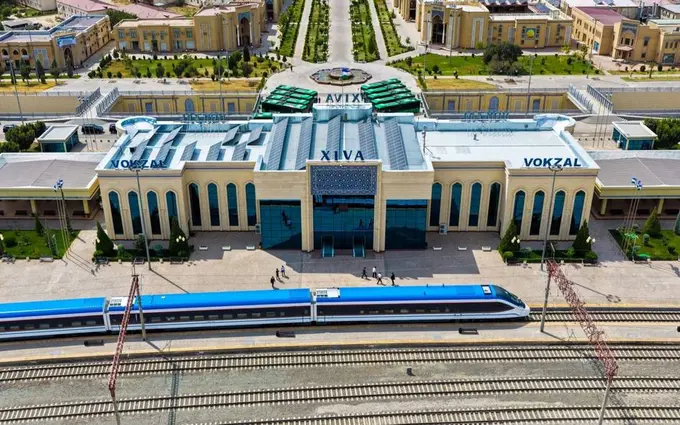
The circular railway connects Kokand, Namangan, Andijan, and Margilan, forming a 324 km route that is expected to improve accessibility, reduce travel time, and create new opportunities for residents, businesses, and tourists.
Shavkat Mirziyoyev traveled on the first train together with members of the public, marking the official launch of the service. The project was implemented under the presidential decree on increasing passenger transportation on local railway routes through 2030.
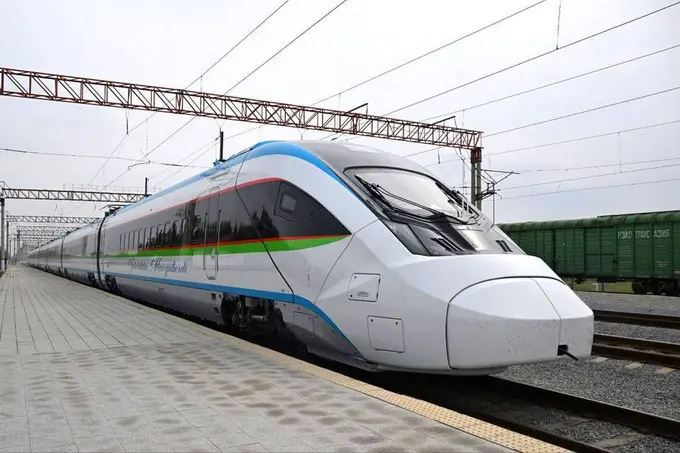
The train, manufactured at the Tashkent Plant for the Construction and Repair of Passenger Cars, consists of six cars with a capacity of 586 passengers and a maximum speed of 120 km/h. The service is expected to handle up to 1,500 passengers per day, offering a cost-effective alternative to road transport.

Ticket prices have been set at UZS 15,000 ($1.2), making the service accessible to a broad segment of the population while supporting a shift toward safer and more efficient public transport.
The trains are equipped with climate control, air-conditioning, free Wi-Fi, and USB charging ports. Accessibility features include special lifts, spacious seating, and adapted restrooms for passengers with disabilities, as well as bicycle racks to support multimodal mobility.
Safety systems meet international standards, with onboard video surveillance and impact-resistant equipment integrated into the design.
Officials noted that the new railway is expected to boost tourism potential in the Fergana Valley, with plans to expand service infrastructure such as hotels, restaurants, and commercial facilities near stations to generate additional income opportunities.

During the visit, the president also reviewed broader regional development projects, including the construction of the “New Uzbekistan” residential area in Kokand. The project, valued at UZS 1.85 trillion ($145mn), is designed to accommodate 25,000 residents with modern housing, education, and commercial infrastructure.
The development includes 84 multi-story residential buildings, alongside schools, preschool institutions, a higher education facility, business and shopping centers, and public parks, forming a comprehensive urban ecosystem.
The first phase has already been completed, delivering 56 ten-story buildings with 4,394 apartments, which are now ready for occupancy. Housing units are being offered with a 35% down payment, financed at an annual interest rate of 16% over 20 years, expanding access to home ownership.

The project addresses rising housing demand in Kokand, where population density and economic activity have increased pressure on existing infrastructure. Authorities aim to expand the city using modern construction standards and integrated planning.
Officials noted that the new residential area is designed not only to improve living conditions but also to reshape the city’s economic landscape, allowing residents to live, work, study, and access services within close proximity.