South Korea is nearing a deal to import crude oil from Kazakhstan as it seeks to diversify energy supplies amid disruptions linked to tensions in the Middle East, Reuters reports.
South Korea is close to finalizing an agreement with Kazakhstan, with details on volumes and timelines expected to be announced soon, Industry Minister Kim Jong-kwan stated.
The move comes as Seoul looks to reduce its heavy reliance on Middle Eastern energy imports. Currently, around 70% of South Korea’s crude oil imports come from the region, making the country vulnerable to supply disruptions.
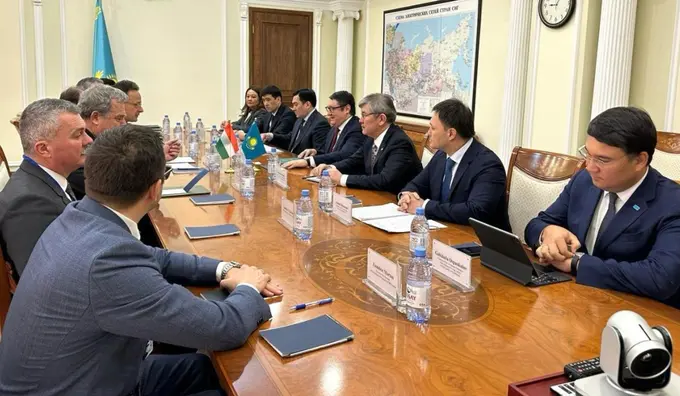
Earlier this month, senior officials from South Korea, including Presidential Chief of Staff Kang Hoon-sik, visited Kazakhstan to discuss securing stable supplies of crude oil and naphtha. The visit followed growing concerns over shipping disruptions through the Strait of Hormuz.
Despite the geographical distance, delivery times from Kazakhstan are expected to be comparable to shipments from the United States, taking approximately 50–60 days, according to the minister.
The agreement is part of a broader strategy to diversify long-term energy supply sources and reduce exposure to geopolitical risks in key transit routes. South Korea has also recently secured a commitment to import 24mn barrels of oil from the United Arab Emirates.
Concerns have intensified after Iran introduced new transit rules for the Strait of Hormuz, categorizing countries into “neutral,” “friendly,” and “hostile” groups, with restrictions imposed on certain states. The waterway handles around 20% of global oil trade, making any disruption a significant risk to global energy markets.
The potential deal with Kazakhstan highlights Central Asia’s growing role as an alternative energy supplier, as countries seek to secure stable and diversified energy sources amid global uncertainty.
Broader cooperation between Kazakhstan and South Korea has also been expanding beyond energy. In 2025, the two countries signed a memorandum of understanding to advance the Alatau Smart City project, focusing on collaboration in infrastructure, energy, water management, waste systems, and logistics development.