Uzbekistan has increased its green coverage from 8% to 14.2% in recent years, the presidential press service reported, as the country launched a National Dendrology Park under its nationwide Green Nation program.
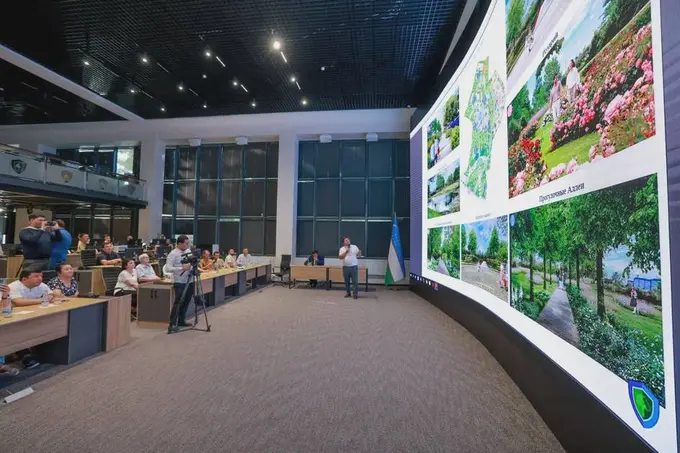
President Shavkat Mirziyoyev officially launched the project during a tree-planting event held within the “Yashil makon” initiative in Tashkent on April 1. The National Dendrology Park will be established on 108 hectares and is expected to serve as a major scientific, educational, and ecological hub.
Under the initiative, Uzbekistan has been planting up to 200 mn trees annually over the past five years. During this period, more than 2,000 hectares of green areas have been developed, including 942 parks and public green zones, as well as 47 “New Uzbekistan” parks.
Large-scale afforestation has also been carried out across 256,000 hectares of mountainous, desert, and foothill areas, while 2mn hectares of protective forests have been created on the dried bed of the Aral Sea.

Additional measures include the creation of 60 km of “green belts” across 33 districts to reduce the impact of dust and sandstorms. Modern nurseries capable of producing 5.5mn ornamental seedlings annually have been launched, while pilot projects using drought-resistant halophyte plants have been introduced on 50 hectares to combat soil salinization.
As a result, the country’s green coverage has increased from 8% to 14.2%. A recent presidential decree sets a target to raise this figure to 30% by 2030 and increase green space per capita to 10 square meters.
New projects include creating 1mn hectares of forests in Karakalpakstan, 300,000 hectares in Navoi and Bukhara regions, and 85,000 hectares in Khorezm.

Public participation has also expanded. During the latest planting campaign, around 21,000 people planted 88,000 seedlings across 164 hectares nationwide.
Funding under the “Mening bog‘im” (My garden) program has been increased from UZS 250mn ($20,600) to UZS 400mn ($33,000), while each member of the Legislative Chamber will receive UZS 412mn ($34,000) to support green space projects in their constituencies.
The initiative also integrates scientific and educational infrastructure. The park will include in-vitro laboratories, medicinal plant centers, and seed selection facilities, while new “green” technical colleges will train up to 10,000 specialists annually under a dual education system.