Uzbekistan’s Committee on Industry, Radiation and Nuclear Safety under the Cabinet of Ministers has developed a draft regulatory legal act titled “Nuclear power plant site. Safety requirements,” aimed at establishing standardized criteria and mandatory safety requirements for nuclear power plant (NPP) site selection and assessment.
The draft document was submitted for public discussion until February 16 and has been coordinated with the Ministry of Construction and Housing and Communal Services, the National Committee for Ecology and Climate Change, the Atomic Energy Agency, and the Academy of Sciences.
The draft regulation outlines safety requirements for all stages of site selection, including preliminary assessment and final approval. It also defines procedures for monitoring environmental components such as atmospheric air, surface and groundwater, soil, flora, and fauna, taking into account natural-geographical, socio-demographic, and engineering-geological conditions of the area. The document further establishes the methodology for assessing the potential impact of NPP operations on the population, environment, and ecological stability.
The primary objective of the regulatory act is to establish criteria, mandatory requirements, and assessment procedures to ensure radiation and technical safety during the selection and evaluation of NPP sites, considering geological, seismological, hydrogeological, climatic, environmental, and social security conditions.
The draft identifies areas that are strictly prohibited or unfavorable for NPP construction, such as regions with active faults or high seismic activity. It sets requirements for assessing the impact of natural hazards, including seismic, hydrometeorological, and geological events, as well as man-made hazards such as explosions, fires, and chemical hazards. It also specifies procedures for environmental monitoring of air, water, and soil, and determines protective and evacuation zone boundaries based on population density and transport infrastructure.
The adoption of the draft regulatory act is expected to minimize risks by identifying and mitigating significant natural and man-made hazards during site selection, which will reduce the likelihood of future accidents. It is also intended to simplify the licensing process, as safety documentation prepared according to unified requirements will streamline licensing and state control procedures.
In addition, the act provides for the protection of the environment and public health through the establishment of a radiation monitoring system and proper planning of protection zones, which will minimize environmental contamination and radiation exposure to the population. A standardized, transparent, and internationally aligned site selection process is expected to increase public confidence in nuclear power projects.
The development of the draft considered the standards and best practices of the International Atomic Energy Agency (IAEA) on site selection and evaluation for NPPs. Regulatory frameworks from other countries, including the United States (10 CFR 100 Reactor Site Criteria), Canada (CSA seismic design standards), China (HAF, GB Safety Regulations), Japan (JEAG, JIS technical seismic design guides), France (requirements for extreme earthquake protection), and Russia (NP-032-19 “Nuclear Power Plant Site. Safety Requirements”) were also reviewed, and the draft was updated to align with these international standards.
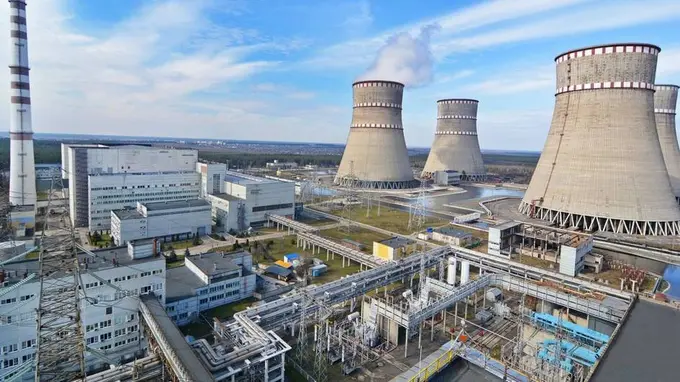
The first nuclear power plant in Uzbekistan will be constructed in the Forish district of the Jizzakh region. Atomstroyexport, part of the Russian Rosatom, has been appointed as the main contractor for construction. The project includes two large-capacity and two small reactors, with phased commissioning planned between 2029 and 2033. Agreements for construction were signed with Rosatom in September 2025, and the plant is expected to be completed within 7-8 years.