Uzbekistan has reduced pollutant emissions by 200 tons annually at the Tashkent Thermal Power Plant as part of broader national efforts to enhance environmental sustainability and expand the share of “green” energy in the country’s power system.
According to the Ministry of Energy, repair work was completed on five boiler units and one gas turbine unit at the facility, while fuel oil has been fully phased out. Electricity and heat generation now rely entirely on natural gas. In 2024, two new gas-turbine units with a total capacity of 64 megawatts were launched, leading to a reduction in annual pollutant emissions.
To strengthen environmental monitoring, four automatic air-quality stations and one eco-post have been installed at the plant. Their data are transmitted in real time to the Situation Center of the National Committee for Ecology and Climate Change. Mechanical filtration systems across the station’s gas networks have also been upgraded.
In central Tashkent, 16,490 trees were planted over 15.5 hectares as part of a new “green belt” initiative. Repairs were conducted at nine city heating centers, six of which were equipped with new absorption filtration systems.
Major upgrades are also underway across other energy facilities. A 100-megawatt gas-piston power plant has been completed at Thermal Power Plant No. 4. Once operational, it will produce 876mn kWh of electricity and 784,000 Gcal of heat annually, enabling the country to save 15mn cubic meters of natural gas. The plant will supply electricity to 365,000 households and heat to 58,000 households.
The site also features a filter system capable of cleaning waste emissions with 99.5% efficiency. The installation of solar panels and water heaters has helped reduce emissions by an additional 110.7 tons per year, while the use of technical water has saved 350,000 cubic meters of drinking water. A newly commissioned 370-megawatt steam-gas plant is expected to save 350.9mn cubic meters of natural gas annually.
Uzbekistan’s energy sector has seen rapid modernization in recent years. Over the past three years, eight new power plants with efficiency rates above 60% have been launched through public-private partnerships, saving 2.6bn cubic meters of natural gas annually.
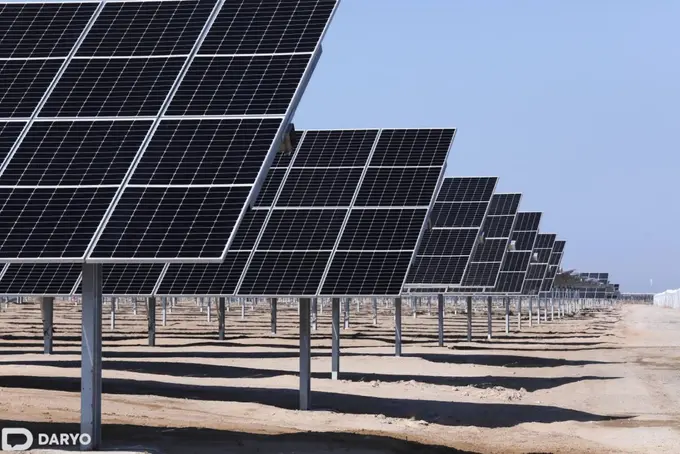
Additionally, 13 solar and five wind power plants with a combined capacity of 4,782 MW have been commissioned. Since the beginning of this year, they have generated 9.7bn kWh of renewable electricity. Including hydropower output, total “green” generation has reached 15.7bn kWh, saving 2.867bn cubic meters of natural gas and preventing 4.2mn tons of harmful emissions. Uzbekistan aims to raise the share of renewable energy to 54% by 2030.
Solar panels with a total capacity of 1,914 MW and 4.85mn liters of solar collectors have also been installed at social facilities, government buildings, and households. These measures have saved 761mn cubic meters of natural gas and reduced harmful emissions by 905,000 tons.
As part of the nationwide “Yashil Makon” (Green Space) program, more than 2.5mn tree seedlings were planted in 2025, helping expand “green belts” across the regions.