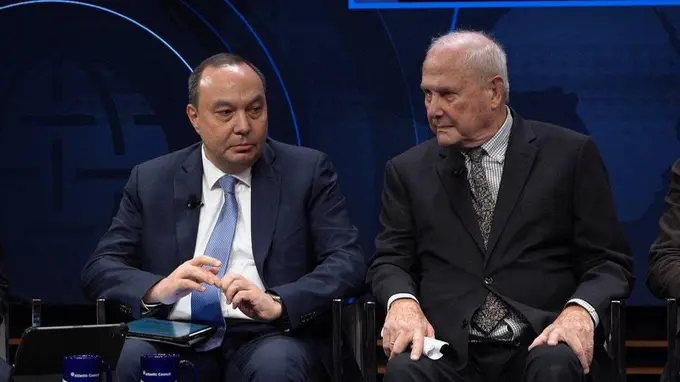
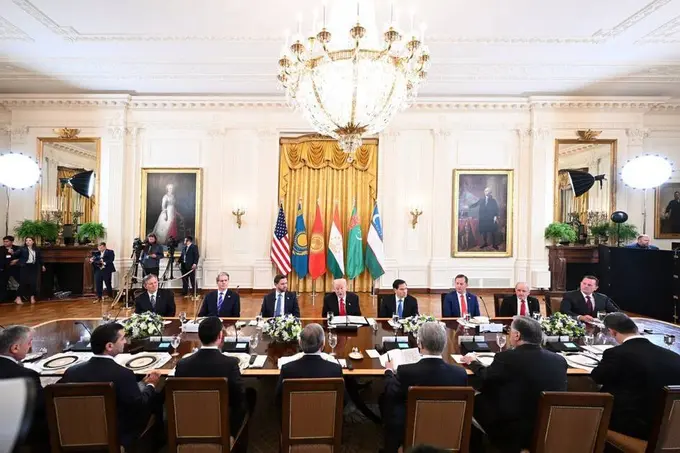
Former US Ambassador to Uzbekistan and Kazakhstan Daniel Rosenblum has warned that Washington has effectively “surrendered” its influence in the information space of Central Asia, leaving the region open to Russian and Chinese dominance. His remarks were reported by the Yale Daily News, citing a lecture he delivered at Yale University.
Rosenblum, who served as ambassador to Uzbekistan from 2019 to 2022 and to Kazakhstan from 2022 until earlier this year, spoke at an event titled “Battling the Firehose of Falsehood: Confronting Russian Disinformation in Central Asia.” The lecture drew 45 attendees in person and 35 online.
Drawing on his six years in the region, Rosenblum described a persistent Russian disinformation campaign designed to discredit US diplomats. He recalled a 2023 incident in which Russian media accused him of opening a NATO base in Kazakhstan — when in fact, he was inaugurating a US-funded conference center for the Kazakhstan Institute for Peacekeeping.
“While it is easy to joke about such an absurd idea, the intent behind such Russian information operations is deadly serious,” Rosenblum said.
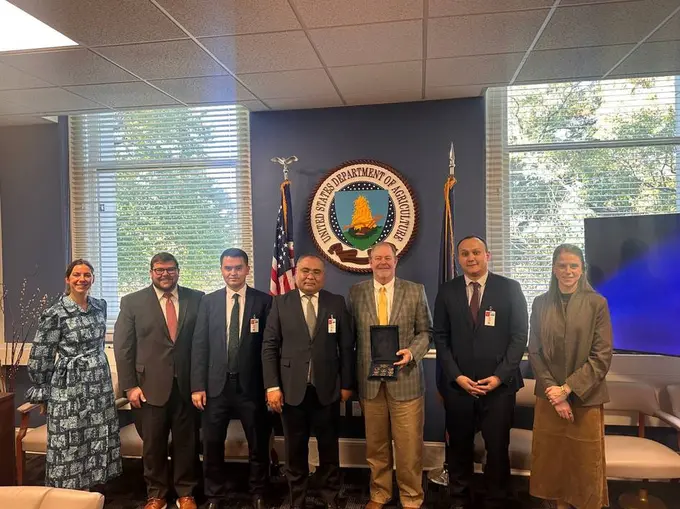
According to the former ambassador, US embassies had attempted to counter these narratives by highlighting concrete achievements, including COVID-19 health programs, agricultural partnerships, and academic exchanges. However, he said these efforts have struggled to gain traction since 2023, citing the dismissal of more than 1,300 State Department employees, the termination of USAID programs in Central Asia, and reduced funding for Voice of America and Radio Liberty.
"Eight months into the second Trump administration, it seems clear that the information war is over in Central Asia — not because the Russians won. We have simply surrendered. A disparaged and a discredited America will be a weak America," Rosenblum said.
He also noted that China's influence in the region has been growing rapidly through its Belt and Road Initiative, which has focused on infrastructure investment and cultural engagement. Beijing, he said, is “having a lot of success in making friends and influencing people.”
In a post-lecture interview, Rosenblum stressed that America's main challenge is internal rather than external.
"The biggest challenge today is ourselves. We have to decide as a country, do we want to be engaged in the world or not? If we cut ourselves off from the world, we will ultimately be less secure and less prosperous," he said.