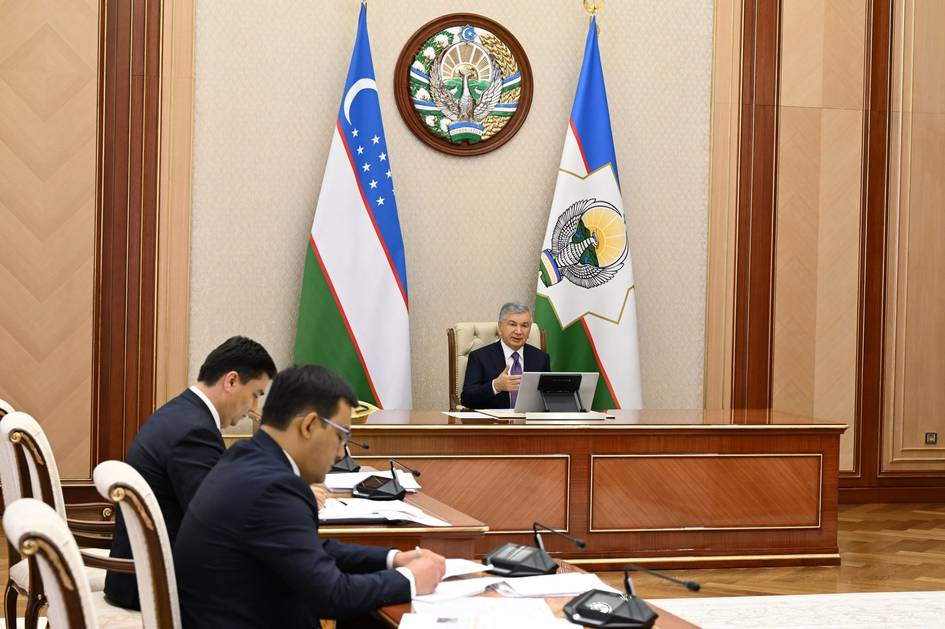
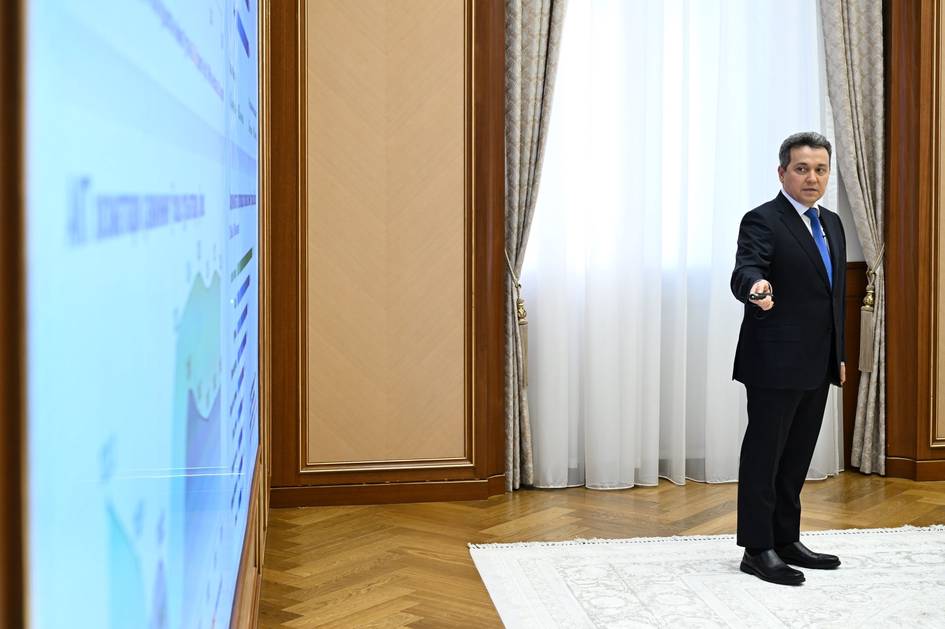
President Shavkat Mirziyoyev has recently reviewed ongoing reforms and outlined future priorities in artificial intelligence (AI) and digitalization, highlighting their central role in accelerating economic growth and improving living standards.
The briefing focused on the country’s long-term digital transformation goals under the Uzbekistan–2030 Strategy. Authorities aim to boost exports of IT services and software products to $5bn, create 300,000 jobs for young people in the sector, and position Uzbekistan among the top 30 countries in the UN E-Government Development Index.
Digitalization has increasingly driven Uzbekistan’s economic performance in recent years. Over the past five years, gross value added in the sector has grown by an average of 24.8%, significantly outpacing overall GDP growth. Employment in information and communications has risen from 64,300 in 2017 to 108,800, while the number of self-employed individuals surged from 10,000 to 181,000.
The sector now includes more than 11,900 enterprises, around 1,400 of which involve foreign capital.
Source: Presidential Press Service
At present, nearly 100 practical projects and over 200 AI pilot initiatives are underway. One example is the deployment of an AI-based real-time production analysis system at Almalyk Mining and Metallurgical Complex, which has reduced energy consumption by 10%, lowered production costs by 15%, and improved labor productivity by 10%.
To support expanding AI use, Uzbekistan has launched an AI infrastructure project featuring a GPU cluster with $24mn in investment. Authorities plan to deploy an additional $45mn in equipment by year-end to increase computing capacity.
Plans are also underway to integrate more than 130 databases across sectors such as healthcare, energy, transport, customs, taxation, and agriculture. This unified data environment is expected to improve public services, strengthen data-driven decision-making, and boost efficiency across the economy.
Officials presented a range of AI applications across key industries. In healthcare, projects include early detection systems for stroke and breast cancer, digital medical assistants, and automated documentation. In agriculture, AI will support crop yield forecasting, pest risk alerts, and pasture monitoring.
Source: Presidential Press Service
Transport initiatives will focus on infrastructure monitoring and intelligent traffic systems, while construction and industry projects aim to detect violations, streamline cost reviews, and enhance production monitoring through video analytics.
Uzbekistan’s startup ecosystem continues to expand, with the number of startups reaching 950—up 37.5% year-on-year. The country now hosts 22 venture capital funds, with the ecosystem valued at $4.3bn and total startup investment reaching $132mn.
The government has increased the prize fund for the Presidential IT Startup Competition to $5mn and introduced new AI-focused contests worth $1mn. A new President AI Award is also under consideration, covering areas such as public administration, healthcare, education, green economy, and agrotechnology.
Efforts to employ 300,000 young people in IT by 2030 will include expanding regional digital ecosystems and establishing new branches of IT Park Uzbekistan in Samarkand, Namangan, Sirdaryo, and Bukhara, alongside an R&D center in Nurafshon.
The planned center, set for development between 2027 and 2031, will feature high-tech laboratories, a computing facility with 200 GPUs, a startup campus, and a commercialization hub, with total investment estimated at $200mn.
Source: Presidential Press Service
Digital education remains a priority. Under the 5 Million AI Leaders initiative, more than 1mn participants have completed basic training, over 300,000 reached intermediate level, and 1,500 qualified as advanced specialists. Plans include introducing AI classes and startup zones in schools.
However, infrastructure challenges persist. Around 69% of schools lack Wi-Fi access, 5,000 computer labs are outdated, and 2,000 schools have no such facilities. Authorities aim to modernize 16,000 labs, expand internet access, and improve connectivity nationwide by 2030.
Telecommunications coverage has expanded significantly, rising from 41% to 98% of populated areas, while international internet bandwidth has increased 65-fold to 4,400 Gbps. The government aims to grow the telecom market by at least 10% annually, targeting a volume of UZS 27.5 trillion ($2.3bn) this year.
Cybersecurity and system integration were also emphasized. Officials noted that all state information systems should operate through a unified e-government platform, with mandatory cybersecurity audits and regular IT system reviews to strengthen data protection.
President Shavkat Mirziyoyev emphasized that AI and digitalization are not merely technological trends but a strategic direction shaping economic efficiency, governance quality, service accessibility, and global competitiveness. He instructed relevant agencies to accelerate implementation and elevate efforts to a new level.