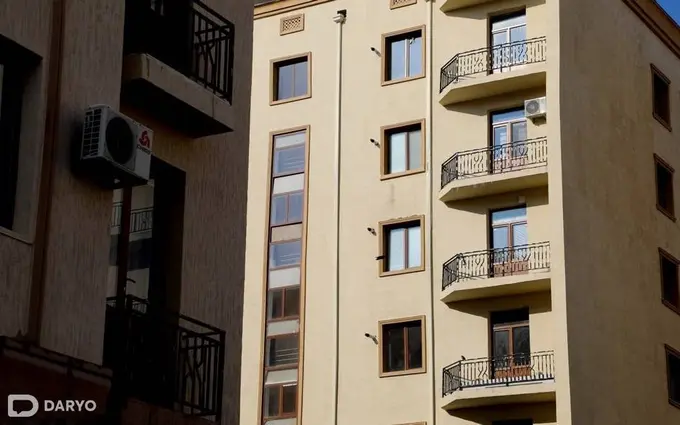
President Shavkat Mirziyoyev reviewed a presentation on February 3 outlining new approaches to urbanization and housing construction, focusing on long-term planning, land use efficiency, and administrative reforms, as per to presidential press service.
Over the past eight years, Uzbekistan has commissioned around 120mn square meters of housing, equivalent to more than 600,000 houses and apartments. During this period, 541,000 citizens received preferential mortgage loans and housing subsidies totaling UZS 103 trillion (over $8.4bn). The expansion of housing construction has contributed to the development of the building materials industry across multiple regions. As a result, the urbanization rate increased from 40.3% in 1991 to 51%.
Despite these figures, it was noted that current construction volumes remain insufficient to meet growing demand. Approximately 200,000 new families are formed annually, increasing pressure on housing supply, transport networks, and social infrastructure. Average living space per capita currently stands at 18.9 square meters. To raise this figure to at least 23 square meters, housing construction is projected to reach 280,000 apartments per year by 2040.
To support this objective, a new urbanization management system has been introduced, including the establishment of a dedicated committee responsible for increasing housing construction volumes. Under current plans, 140,000 apartments are to be built in 2026, followed by 150,000 in 2027 and 160,000 in 2028.
The presentation also highlighted the link between urbanization and economic development, including the creation of conditions for business activity, startup growth, industrial and IT clusters, and improvements in labor productivity.
Efficient land use was identified as a key priority. International assessments indicate that uncontrolled urban expansion in some regions could lead to future shortages of agricultural land. In response, plans call for renovating outdated housing stock and increasing the share of renovation projects in overall housing construction from 15% to 60% by 2040. The number of “New Uzbekistan” residential estates is also expected to increase to 120.
Administrative procedures in the construction sector were another focus area. Currently, obtaining construction permits involves nine stages and takes an average of 90–120 days. By contrast, international practice using a “land ready for construction” model reduces this process to 7–15 days.
It was proposed to introduce this mechanism in Uzbekistan, whereby all preparatory and permitting procedures would be completed before land plots are auctioned. Under this approach, land not ready for construction would be excluded from auctions, and successful bidders would receive all required documentation automatically.
The quality of construction was linked to the effectiveness of design documentation. The need to improve the performance of major design organizations, including ToshboshplanLITI, UzshaharsozLITI, UzGASHKLITI, and Qishloq qurilish loyiha, was emphasized. Proposed measures include attracting foreign specialists and introducing modern management systems.
Digitalization was identified as essential for accurate urban planning. Proposals included developing the “Uy-joy” information system, which would integrate a unified database of master plans, a “Yer Banki” registry of land plots ready for construction, a geographic information system for apartment buildings, an escrow mechanism, developer ratings, and related data.
Following the presentation, the president approved the proposed measures and instructed responsible agencies to ensure their consistent and long-term implementation and to meet established targets.