A new $4.6 mn project to strengthen water resource management and climate resilience in Uzbekistan’s Aral Sea region has been officially launched at the Ministry of Water Resources, marking a major joint initiative by the United Nations Development Programme (UNDP) and the Government of Japan.
The three-year project (2026–2028) aims to enhance integrated and climate-resilient water management systems in the Aral Sea region, one of Central Asia’s most environmentally vulnerable areas. The initiative focuses on strengthening governance mechanisms, improving water-use efficiency, increasing agricultural productivity and supporting inclusive, sustainable development.
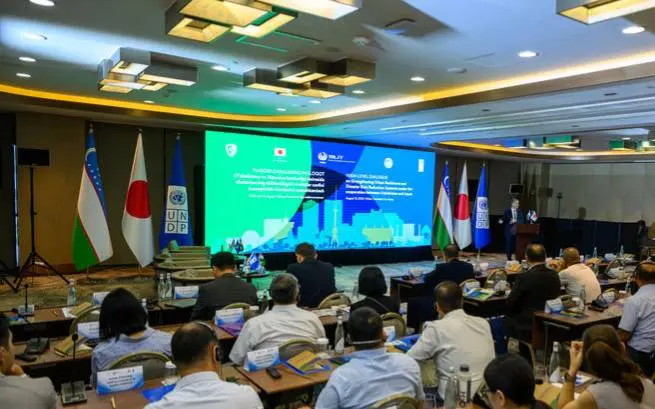
The launch ceremony was attended by First Deputy Minister of Water Resources Zokir Ishpulatov, Japan’s Ambassador to Uzbekistan Kenji Hirata and UNDP Resident Representative Akiko Fujii. The parties exchanged notes and signed the project document, reaffirming their commitment to joint development efforts.
According to officials, the project aligns with Uzbekistan’s national water sector reform priorities and is designed to improve institutional capacity, introduce digital tools and promote data-driven decision-making. Centralized GIS systems and real-time monitoring platforms will be introduced to strengthen accountability and improve resource allocation.

The initiative is structured around four key components: strengthening national and local water governance institutions; digitalizing water management systems; improving irrigation infrastructure and climate-resilient agricultural practices for farmers and smallholders; and expanding regional knowledge exchange, advocacy and communication platforms.
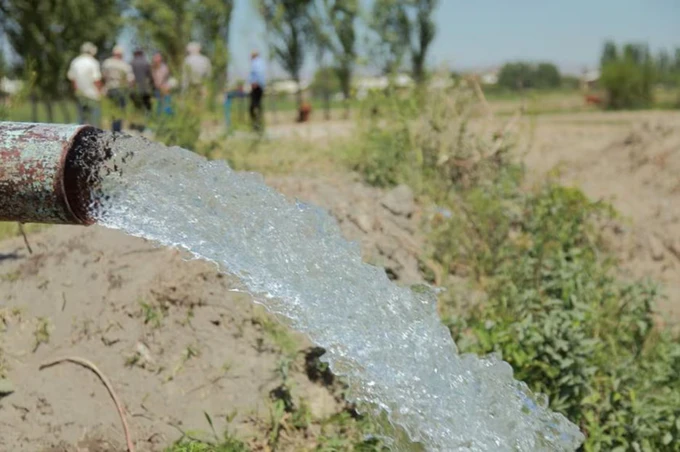
More than 1,000 farmers and households in targeted districts are expected to directly benefit from improved access to water resources, climate-adaptive agricultural methods and innovative technologies. Planned measures include irrigation rehabilitation, precision irrigation systems, wastewater reuse solutions and renewable energy-based desalination technologies.
Gender equality has been integrated as a core principle of the project, with targeted support to increase women’s participation in water management, capacity-building and decision-making processes. Gender-disaggregated data will be used to monitor inclusive outcomes.

Beyond national impact, the initiative will promote regional dialogue among Central Asian countries, Japan and other stakeholders. Public awareness campaigns, documentary production and platforms such as the Aral Sea Cultural Summit will help position the Aral Sea region as a model for integrated, climate-resilient water solutions that can be replicated in other affected countries.
The project builds on previous UNDP–Japan cooperation in Uzbekistan. Between 2023 and 2025, the partners implemented a climate-resilient agriculture initiative in four districts and 65 settlements, benefiting more than 376,000 people. That program improved access to electricity for over 7,000 residents, provided clean drinking water to more than 7,700 people and upgraded education and healthcare infrastructure for over 6,200 citizens. Japanese water technologies, including the Johkasou wastewater treatment system, were successfully introduced in key social facilities, demonstrating scalable solutions for water-scarce areas.
Earlier, UNDP Uzbekistan received the Procura+ “Global Initiative of the Year” award for improving access to clean water in the Aral Sea region through sustainable and socially inclusive public procurement practices.