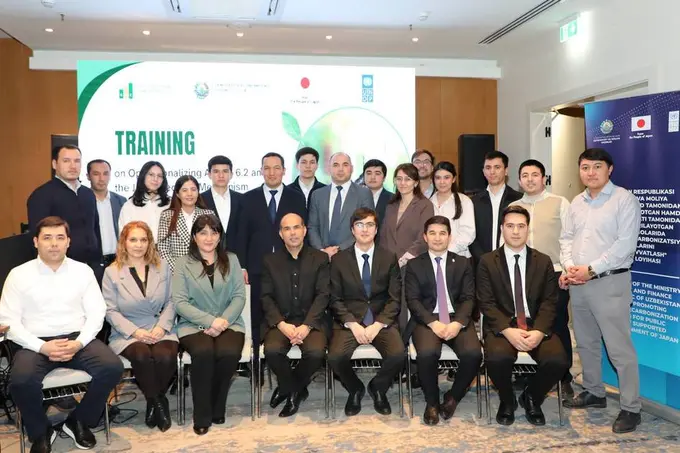
Uzbekistan and Japan discussed ways to strengthen early warning systems, seismic safety and climate-resilient urban planning as part of efforts to make cities across Central Asia better prepared for natural disasters and climate-related risks.
The high-level dialogue was organized by the United Nations Development Program (UNDP), Uzbekistan’s National Committee on Ecology and Climate Change, the Ministry of Emergency Situations and Japan’s Ministry of Land, Infrastructure, Transport and Tourism.
The event was held under two UNDP regional projects implemented with support from the Government of Japan: “Enhancing Urban Resilience to Disaster Risk and Climate Change in Central Asia” and “Strengthening the System for Region-Wide Disaster Risk Reduction in Central Asia.”
Government officials, Japanese and Uzbek partners, and experts discussed approaches to integrating climate adaptation into urban planning and strengthening regional cooperation on disaster risk reduction. Aziz Abdukhakimov, Advisor to the President on Environmental Issues and Chairman of the National Committee on Ecology and Climate Change, said the dialogue could create opportunities for cooperation with Japanese companies and technical experts.
“This dialogue will open new opportunities for cooperation with Japanese companies and technical experts, particularly in the areas of early warning systems, sustainable infrastructure, sustainable urban development, and advanced environmental technologies,” he noted.

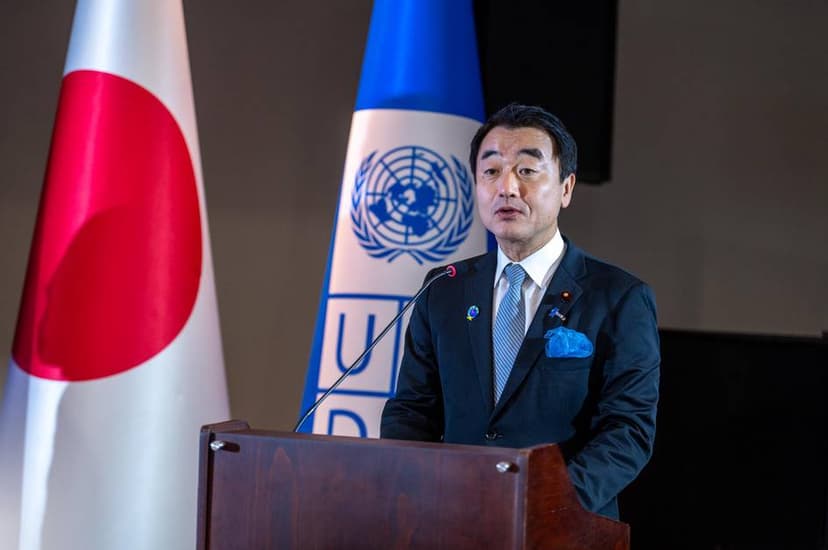
Japan’s State Minister of Land, Infrastructure, Transport and Tourism, Hajime Sasaki, emphasized that Japan’s experience with repeated natural disasters had underscored the importance of preparing cities and infrastructure before disasters occur.
“Japan has learned the importance of understanding risks and strengthening the resilience of cities and infrastructure before disasters occur,” Sasaki stressed, adding that Japan is ready to share its knowledge, technologies and public-private expertise with Uzbekistan.
From seismic safety to flood preparedness
Participants discussed seismic safety, flood preparedness and risk-informed urban development, while Japanese experts presented approaches to disaster response and Uzbek representatives outlined measures being implemented in Tashkent and Namangan. Khurshid Sotiyev, Deputy Minister of Emergency Situations, said the issues discussed have a direct impact on public safety.
“Early warning systems, risk-informed urban planning, seismic safety, and integrated monitoring solutions are directly related to the lives and safety of our citizens,” Sotiyev stated.
Japan’s Ambassador to Uzbekistan Kenji Hirata also highlighted the broader “Central Asia plus Japan” framework, under which disaster risk reduction, urban resilience and climate action have been identified as areas of cooperation.
The dialogue also drew attention to the economic importance of resilient urban development. Akiko Fujii, UNDP Resident Representative in Uzbekistan, noted that urbanization can contribute to economic growth but said rapid urban expansion must be accompanied by investment in resilience against future disasters.
As part of the joint initiative, a Climate and Disaster Risk Profile has been developed for Namangan, marking the first such profile for a city in Uzbekistan, according to UNDP.
The dialogue concluded with joint recommendations aimed at strengthening institutional capacity, improving early warning systems and expanding regional cooperation on disaster risk reduction.