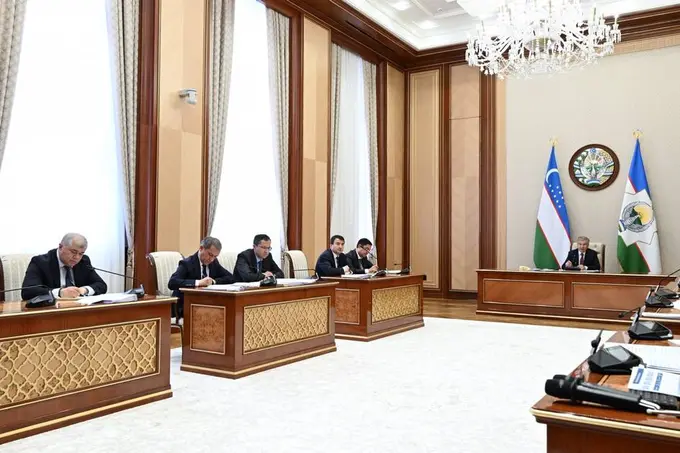
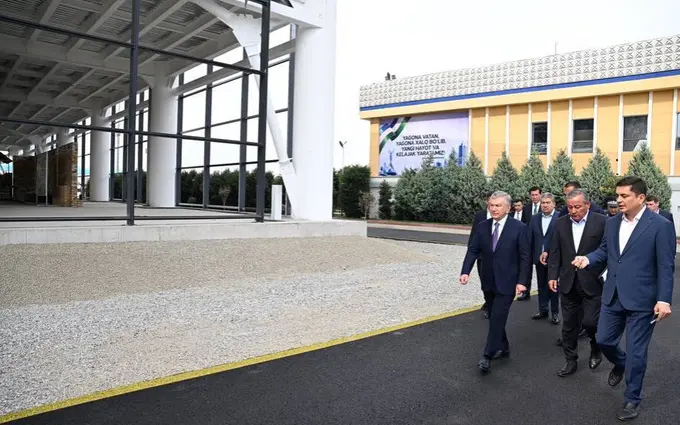
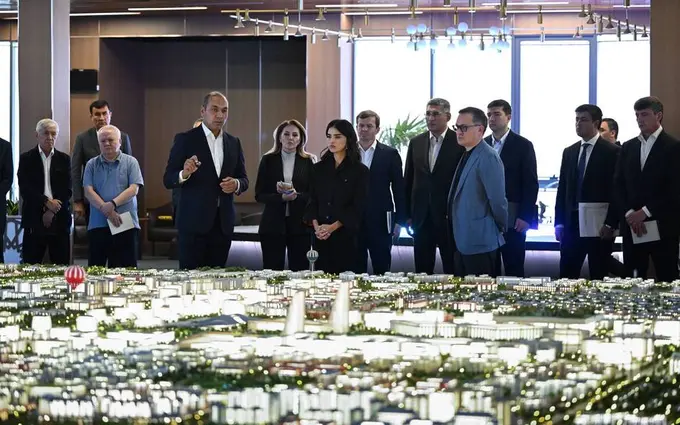
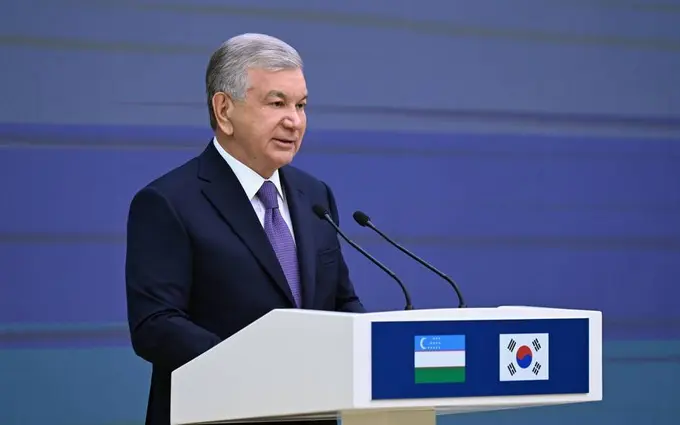
President Shavkat Mirziyoyev chaired a meeting on March 10, to review ongoing reforms and future priority tasks for the Kashkadarya region, focusing on economic growth, infrastructure, agriculture, social programs, and tourism.
Officials highlighted the region’s potential due to its large territory, natural resources, industrial base, and workforce. In 2025, the gross regional product (GRP) grew by 6.8%, industrial output by 7.2%, services by 13.6%, and agriculture by 4.3%. Between 2017 and 2025, GRP per capita increased 3.2 times, reaching UZS 26.9mn (over $2,200), while unemployment and poverty rates declined to 4.9% and 6.5%, respectively.
For 2026, the region aims for industrial growth of 8.6%, investment inflows of $3.5bn, and exports of $727mn. Plans include launching 195 industrial projects worth $1.7bn, expanding production capacities, and creating industrial micro-centers. Key projects involve production of fabrics, clothing, hygiene products, agricultural machinery, electric vehicle charging stations, fiber cement panels, and wall tiles. Two industrial zones—Mubarek Special Innovative Industrial Zone and Karshi Green Technologies Industrial Zone—will host 36 projects valued at over $1.1bn, creating approximately 6,000 new jobs.
Authorities also plan to reduce poverty by supporting small businesses and micro-projects in mahallas, allocating UZS 820bn (over $67.4mn) in loans and UZS 52.3bn (around $4.3mn) in subsidies. Agricultural development remains a priority, with initiatives to expand fodder and crop production on 200,000 hectares by 2030, including 15,000 hectares in 2026. Grain, cotton, and potato yields are expected to rise, supported by modern machinery and water-saving technologies, aiming to increase agricultural income by 20–35%.

Water supply improvements include concreting 320 kilometers of main canals, 3,300 kilometers of internal canals, introducing water-saving technologies on 70,600 hectares, and modernizing 16 pumping stations. A project to supply drinking water to Karshi from the Gissarak reservoir is planned, along with reconstruction of sewerage networks in Karshi, Shakhrisabz, Dehkanabad, and Kamashi districts.
Tourism development is also a focus, with high-altitude and all-season resort projects planned in Kamashi and Shakhrisabz districts, trekking routes in Yakkabag district, and the opening of 45 new hotels and guest houses providing over 1,100 accommodation places. Infrastructure programs include allocating UZS 864bn (over $71mn) to improve roads, water supply, irrigation, and electricity networks across districts and mahallas.
Social programs aim to support families and women, including the establishment of kindergartens and schools, employment for 120,000 women, professional training for 21,000 women, and assistance for 102,000 women under the “Ayollar daftari” program. Labor migration initiatives in cooperation with Germany will send 3,000 young people to work in Germany in 2026 and 5,000 in 2027, supported by the new Education and Technology Center in Karshi.
President Mirziyoyev instructed officials to maintain strict oversight of implementation, meet investment and export targets, create new jobs, and improve living standards in the region.