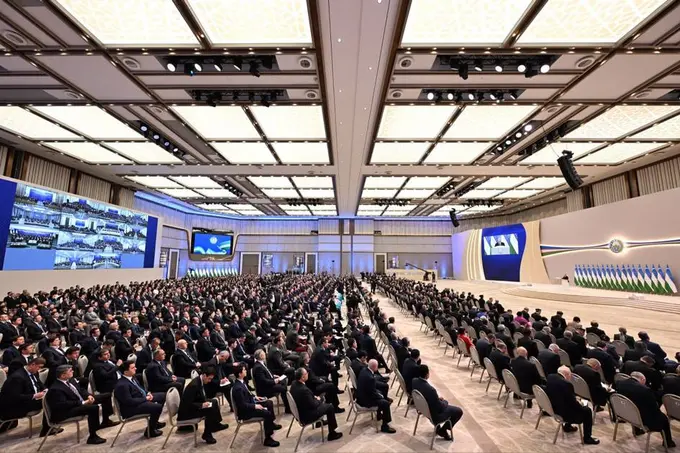
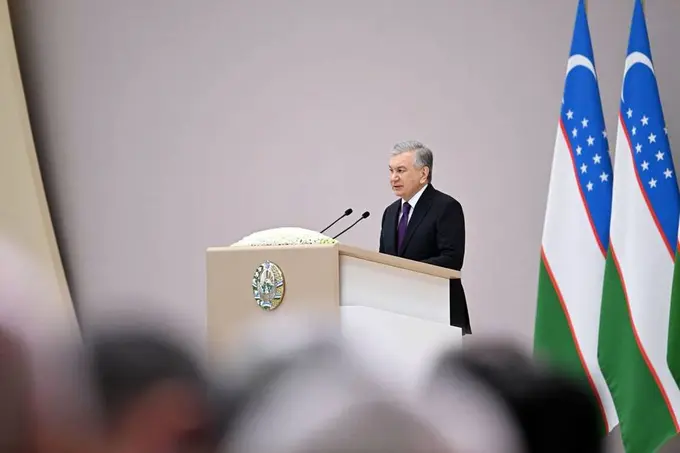
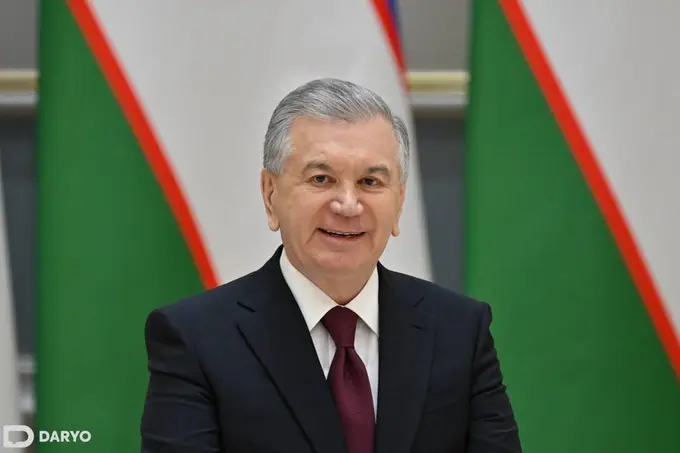
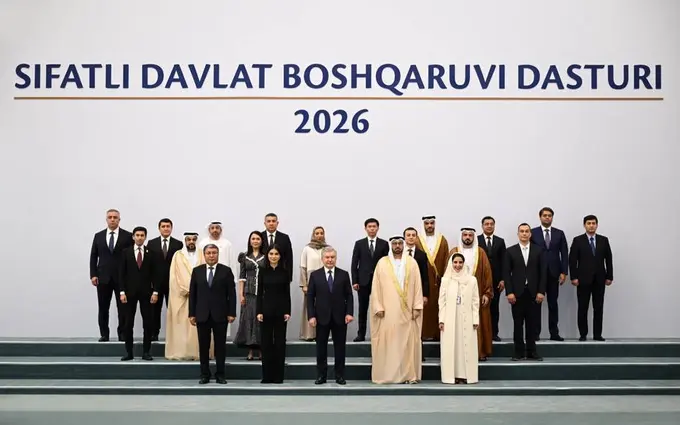
President Shavkat Mirziyoyev delivered a comprehensive address to the Oliy Majlis and the people of Uzbekistan, outlining the country’s key priorities and reform agenda for 2026. The president emphasized a broad vision for the development of neighborhoods, the economy, public administration, social welfare, and environmental sustainability, while continuing Uzbekistan’s global integration.
1. Developing Neighborhoods and Urban Infrastructure
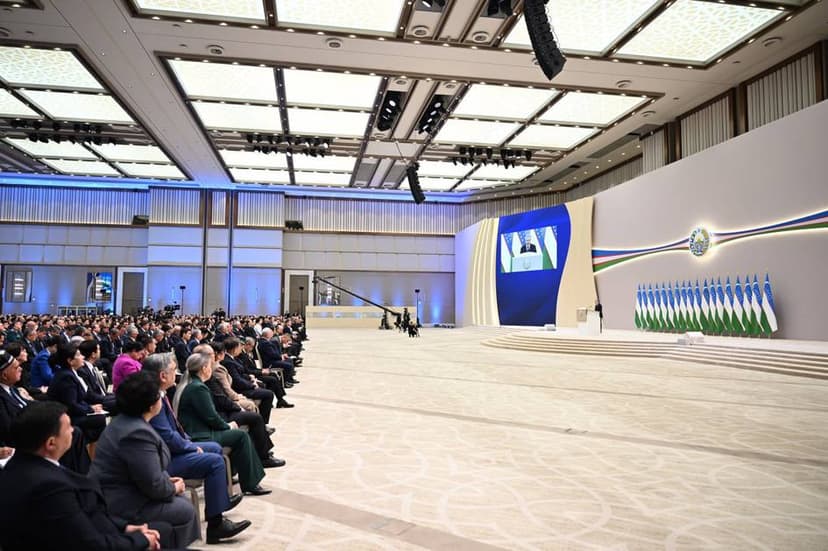
President Mirziyoyev highlighted the importance of neighborhoods as the foundation of national well-being, stating that the living standards in roads, water, electricity, transport, kindergartens, schools, and clinics reflect the success of the country’s reforms.
Starting in 2026, a comprehensive neighborhood development program will be implemented across all regions, focusing on 2–3 districts in each region to solve local problems holistically and improve business infrastructure. A total of UZS 8.5 trillion ($705.2mn) will be allocated for these efforts, with deputies receiving UZS 500bn ($41.5mn) each for district improvements, and an additional UZS 330mn ($27,378) per deputy to develop “green zones” and gardens.
To support these initiatives, district budgets will be strengthened through the retention of a portion of value-added tax (5% in Tashkent and 20% in other regions), lease revenues, and surplus funds, generating an estimated UZS 5 trillion ($414.8mn) for local infrastructure projects. Next year, UZS 20 trillion ($1.7bn) will also be allocated for project-based investments in neighborhood infrastructure to create jobs and improve residents’ lives.
Urbanization reforms will introduce criteria to prevent uncontrolled city expansion, preserve arable land, and identify 45 agglomeration areas. The “Sustainable City” platform and “Living Comfort Index” will measure neighborhood-specific issues and provide targeted solutions.
2. Technological and Innovative Economic Growth
The president emphasized transitioning Uzbekistan’s economy to a technological and innovative growth model. Uzbekistan aims to reach a GDP of $240bn by 2030 by increasing high-value-added production, improving energy efficiency, and fostering local workforce development.
Next year, the country plans to attract $50bn in foreign investment, focusing on projects that transfer advanced technologies and increase exports. New investment agreements will offer market-value land, electronic “single-window” services, and special economic zone incentives.
A major industrial development program will launch 782 new projects worth $52bn in 2026, including mining, metallurgy, chemical production, and high-tech manufacturing. Notable projects include:
- Navoi gold mining expansion: $320mn project to process an additional 2mn tons of ore.
- Almalyk metallurgical complex: $2.7bn project producing 300,000 tons of copper cathodes.
- Samarkand Kimyo plant: $381mn investment producing 370,000 tons of phosphorus and 540,000 tons of fertilizers.
Overall, industrial exports are expected to reach $40bn, with finished and semi-finished products making up 55%. The economy is projected to grow by 6.6% in 2026, reaching a GDP of $167bn.
The president also announced initiatives in digital technology, artificial intelligence, and space exploration, including the launch of Uzbekistan’s first artificial satellite and support for the first Uzbek cosmonaut.

3. Stimulating Domestic Demand and Improving Living Standards
To strengthen domestic demand, UZS 23 trillion ($1.9bn) will be allocated for housing mortgages, with UZS 2.7 trillion ($223.9mn) subsidizing down payments and interest. Construction of 140,000 new apartments will increase demand for consumer goods, supported by UZS 125 trillion ($10.4bn) in consumer loans.
Tourism infrastructure will also expand, with projects in Samarkand, Shahrisabz, Khiva, and Khorezm, alongside the launch of “Uzbekistan Heritage Hotels.” The services market is expected to exceed $100bn, while aviation and railway capacities will double, including a 120-aircraft fleet and 500 kilometers of new high-speed railways.
Agricultural output will increase from $40bn to $60bn, supported by a permanent intervention system and new refrigerated storage facilities to maintain stable food prices.
In 2026, Uzbekistan aims to maintain stable inflation at 6–6.5%, continuing its efforts to ensure price stability while supporting economic growth.
4. Modernizing Education and the Labor Market
Education reforms will focus on technical schools, vocational training, and higher education partnerships with international universities. At least 100 technical schools will be renovated annually starting in 2026, and Advanced Vocational Technical Schools and “Vocational Towns” will guide students toward modern professions.
A digital ecosystem will connect graduates with employers, and specialized training for nurses will incorporate international standards. Investments in digital health and medical infrastructure will total UZS 3.5 trillion ($290.4mn) for non-communicable diseases, vaccination, maternal and child health.
5. Ensuring Ecological Balance and Sustainable Energy Use
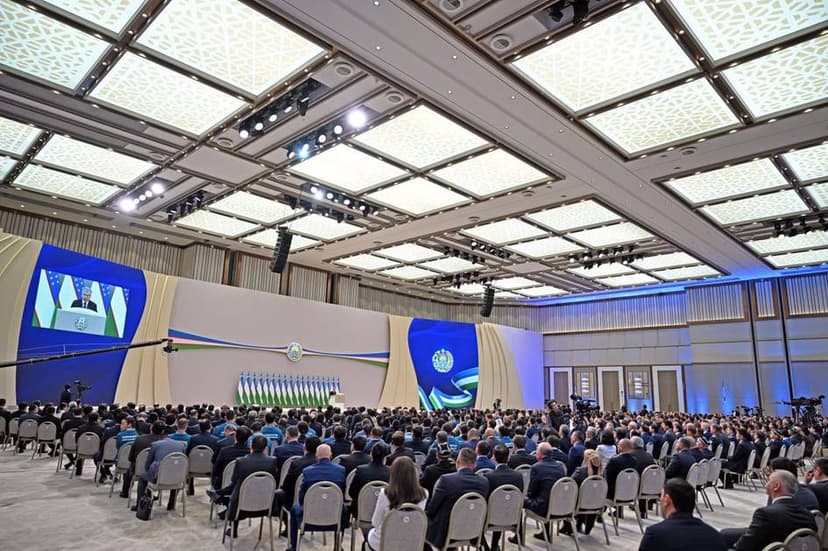
Environmental reforms include a $100mn credit line for enterprises to install pollution control systems, the creation of agroclusters, expansion of electric vehicles, and the construction of green spaces, including 250,000 hectares of new trees and shrubs in key regions.
Water-saving measures will receive UZS 3.3 trillion ($273.8mn), including covering 1,300 kilometers of main canals with concrete, reducing water losses by 500mn cubic meters annually.
6. Strengthening Public Administration, Rule of Law, and Social Protection
The Electronic Government Platform will be updated to integrate over 1,000 public services, with artificial intelligence ensuring efficiency and reducing corruption. Constitutional reforms will separate the roles of regional khokims and local council chairs in 208 districts.
The government will prioritize combating drug abuse, criminal gangs, and domestic violence, introducing new mechanisms for public oversight, digital courts, and investigative judges. Anti-corruption measures will be intensified with compliance positions in all agencies, and strict accountability for embezzlement or abuse of office will be enforced.
Civil society and media freedom will continue to receive support, while the legal framework will encourage transparency and citizen participation.
7. Foreign Policy and International Cooperation
The president emphasized that, in the face of complex global geopolitical and economic challenges, Uzbekistan will continue pursuing a balanced and open foreign policy. Priority will be given to strengthening relations with close neighbors based on centuries-old friendship, strategic partnership, and mutual trust, while expanding cooperation in trade, transport, energy, ecology, security, culture, and education.
He highlighted the importance of broadening economic and trade relations with Afghanistan and deepening multifaceted partnerships with key countries, including Russia, China, the United States, Turkey, Germany, France, Italy, Great Britain, South Korea, Japan, Saudi Arabia, the UAE, Qatar, Jordan, Kuwait, Oman, India, and Pakistan, as well as new strategic directions in Southeast Asia, the Middle East, Africa, Latin America, the South Caucasus, and South Asia.
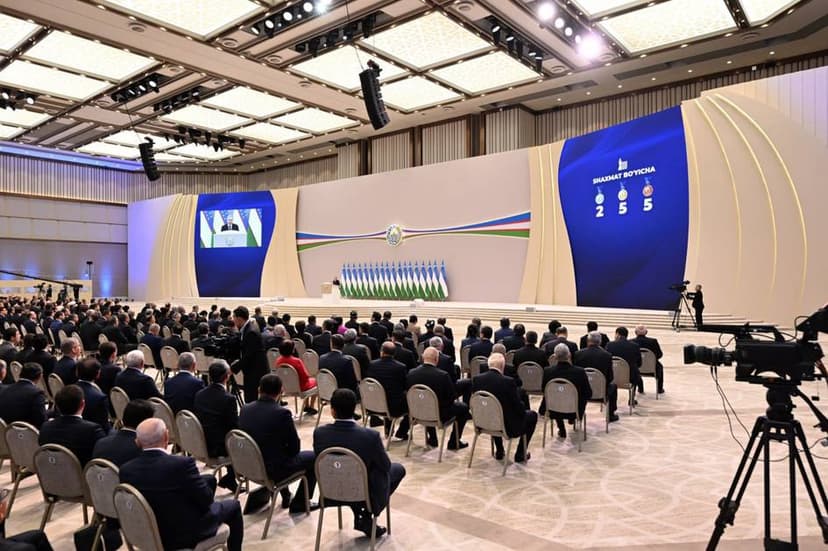
The president expressed special gratitude to the ambassadors of foreign countries attending the conference for their active support in expanding relations with Uzbekistan and assisting the country in its accession to the World Trade Organization (WTO).
He also stressed that close cooperation with leading international and regional organizations and financial institutions, including the IMF, World Bank, Asian Development Bank, Islamic Development Bank, EBRD, and AIIB, will continue, focusing on technological modernization, infrastructure development, and sustainable energy and transport projects.President Mirziyoyev concluded by calling for national unity and active participation in shaping the “Uzbekistan – 2030” strategy, emphasizing the importance of the country’s spiritual and cultural development. He reiterated his confidence in the people’s ability to achieve the country’s ambitious goals and expressed gratitude to citizens working tirelessly for the nation’s progress.