Kyrgyzstan has signed a multi-year framework agreement with the World Bank Group for 2026–2028 and secured $40mn in financing for a regional energy project during the Spring Meetings in Washington.
The agreement, signed in the presence of Adylbek Kasymaliev and Antonella Bassani, establishes common principles and a pipeline of projects to be approved by parliament in a single package, after which individual projects can proceed with Cabinet-level approval.
According to Hugh Riddle - Country manager at the World Bank Group, the framework is expected to reduce delays between project approval and implementation, accelerate delivery, and translate financing into tangible results more quickly, while improving alignment with national development priorities.
Alongside the framework deal, the parties signed a $40mn concessional financing agreement for a new energy project under the Regional Electricity Market Interconnectivity and Trade (REMIT) program, aimed at strengthening cross-border electricity connectivity across Central Asia.
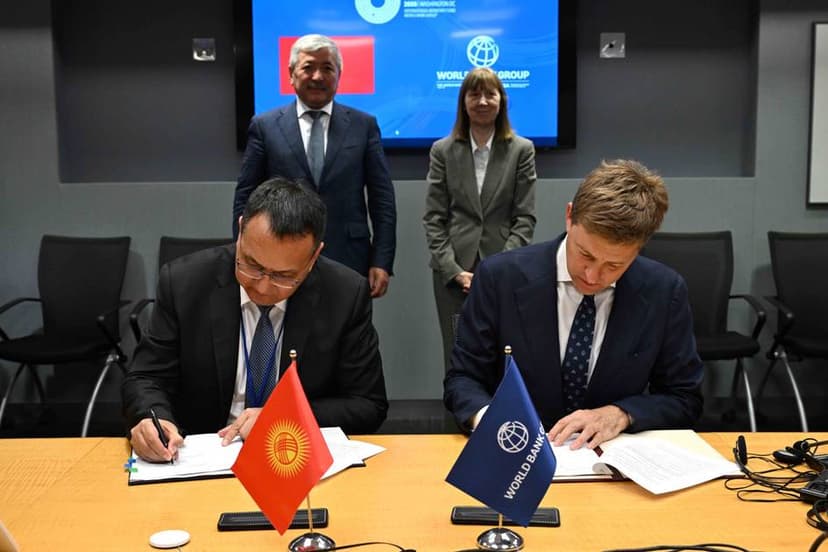
Under the first phase, Kyrgyzstan will implement two key infrastructure components: the construction of the 220 kV Kristall–Yulduz transmission line and the modernization of the Kristall and Torobaeva substations to improve reliability and expand capacity.
The broader REMIT program is expected to enhance regional grid integration, support the development of a unified electricity market, and enable the integration of up to 9 GW of renewable energy, including solar and wind, through private investment.
Officials noted that Kyrgyzstan’s significant hydropower potential positions it as a key player in regional energy trade, offering opportunities to strengthen domestic energy security while contributing to wider economic integration in Central Asia.
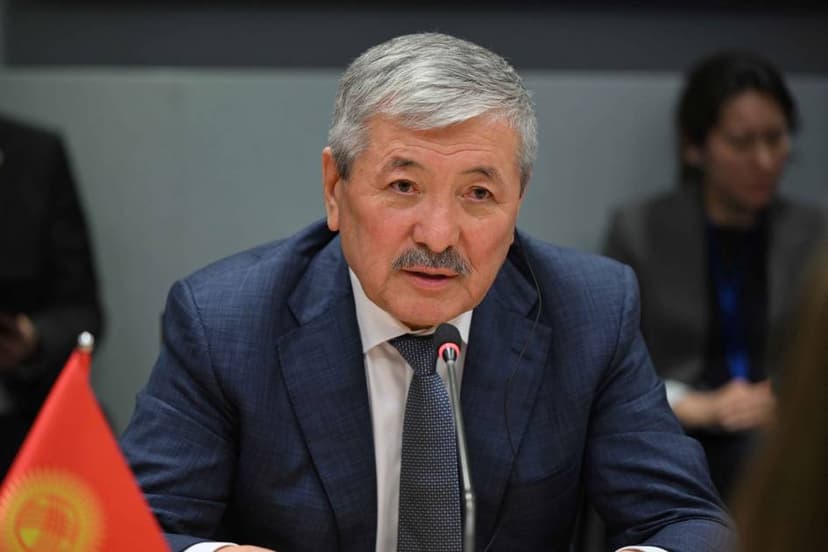
During the meetings, Kasymaliev highlighted strong economic performance, stating that the country’s GDP grew at an average annual rate of 10.2% over the past four years, reaching 11.1% in 2025. According to the International Monetary Fund, Kyrgyzstan ranked among the top three countries globally in real GDP growth in 2024.
He attributed this growth to expansion in industry, construction, and services, as well as the launch of major infrastructure projects, including the Kambarata-1 hydropower plant and the China–Kyrgyzstan–Uzbekistan railway.
In addition, the government reported progress in social reforms, including the adoption of a new Labor Code in 2025 that expanded economic opportunities for women, while the food processing sector recorded a 30.1% increase in output.
Kyrgyzstan also expressed interest in joining the World Bank’s AgriConnect initiative, aimed at strengthening food security and integrating the agricultural sector into global supply chains.