Uzbekistan is projecting 9.1% economic growth in the Tashkent region in 2026, supported by planned investment of $6.2bn and export targets of $2.8bn, according to the presidential press service.
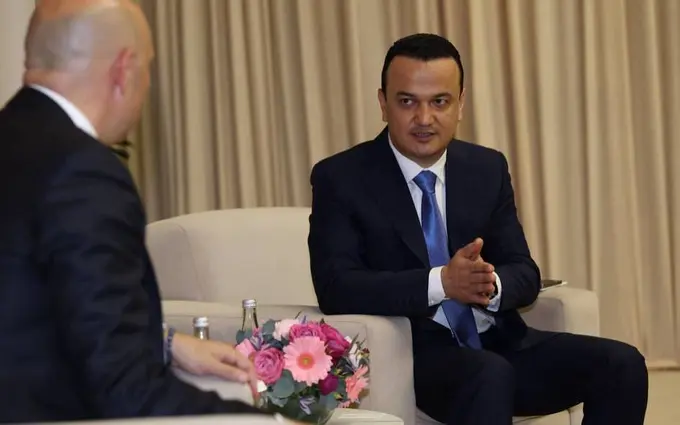
The projections were presented during a meeting chaired by Shavkat Mirziyoyev, which focused on assessing the effectiveness of ongoing reforms and defining future priorities for the region.
The growth outlook reflects expansion across key sectors, with industry expected to grow by 8.8%, services by 17.2%, construction by 15%, and agriculture by 6.6%. These figures build on strong performance in 2025, when the region’s gross regional product increased by 7.1%, driven primarily by services, which grew by 15.2%, alongside construction at 9.8%, industry at 6.6%, and agriculture at 4.2%.

Industrial growth, investment, and jobs
In recent years, large-scale development efforts have been carried out. Between 2024 and 2025, 23 regional development resolutions were adopted, leading to the creation of 14 new industrial zones, implementation of 115 investment projects, the emergence of 237 new exporters, and the creation of more than 300,000 jobs.
Major industrial projects have been launched in Parkent, Akhangaran, and Almalyk across sectors such as electrical engineering, metallurgy, pharmaceuticals, textiles, machinery, and mining. At the same time, efforts are underway to relocate 87 environmentally harmful enterprises from the capital to the region, with more than 15 textile companies already moved, creating 4,700 jobs.
To sustain future growth, authorities plan to introduce artificial intelligence tools to analyze the economic potential of districts and identify new opportunities in investment and exports. A proposal to establish a Center for Artificial Intelligence and Digital Development in the region has been supported. In parallel, new industrial projects are being developed across multiple districts, including manufacturing, pharmaceuticals, and agricultural processing.
Authorities also aim to transform 883 neighborhoods into areas free from poverty and unemployment by creating 84,700 permanent jobs, formalizing 37,000 informal jobs, and providing training to 13,300 unemployed citizens. At the same time, 231 projects worth
UZS 956bn ($78.3mn) are being implemented in disadvantaged areas under the “New Uzbekistan” program.

Agriculture, tourism, and major development projects
In agriculture, efforts are focused on strengthening food security and productivity. A total of 78 livestock projects worth UZS 2.1 trillion ($172mn) are planned, alongside the import of 50,000 pedigree animals and the allocation of 60,000 hectares of pastureland. Water-saving technologies will be introduced on 35,000 hectares, while orchards and vineyards are expected to expand. Poultry projects worth $45mn are expected to produce up to 30,000 tons of meat annually.
Tourism development is also gaining momentum, with accommodation capacity set to increase to 35,500 beds and the number of domestic and foreign tourists projected to reach 16.5mn. Export revenues from tourism services are expected to rise to $600mn, supported by new resort, eco-tourism, and recreation projects across the region.
Infrastructure modernization is underway, including expanded water supply systems, reconstruction of networks, and upgrades to energy infrastructure. At the same time, major innovation projects are planned, including a $5bn medical smart city in Yukorichirchik district and a $35.4mn technology center in Nurafshan aimed at attracting international companies.
Officials emphasized that the overarching goal is to transform the Tashkent region into a model for economic development, job creation, and improved living standards.