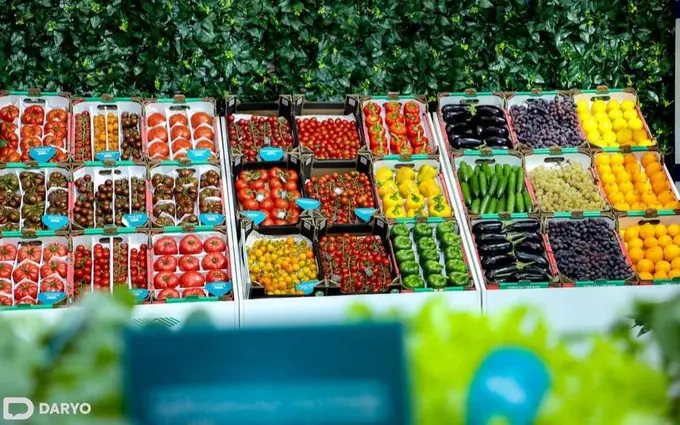
Uzbekistan’s external trade in fruit and vegetable products continues to expand, strengthening its role in the country’s agricultural development and food security system. At the same time, growing trade volumes are contributing to increased greenhouse gas emissions, primarily linked to transportation, refrigeration, and packaging processes, as per to analysis by the EastFruit project.
Growth of trade volumes
Between 2017 and 2023, Uzbekistan’s total foreign trade turnover of fruit and vegetable products in physical volume increased 2.4 times, reaching 2.4mn tons in 2023. Export volumes rose from 736,600 tons to 1.5mn tons over the period, representing a twofold increase.

Imports demonstrated faster growth, expanding 3.6 times—from 255,500 tons in 2017 to 913,300 tons in 2023. The rising import share reflects growing domestic demand for certain products as well as diversification of supply sources.
Methodology for emissions assessment
To evaluate greenhouse gas emissions associated with international trade, experts applied a methodology based on the International Organization for Standardization standard ISO 14083:2023, which was adopted within the European Union framework in April 2024. The assessment relied on general foreign trade statistics and calculations derived from UN Comtrade data.
The methodology measures carbon dioxide equivalent (CO₂-eq) emissions generated throughout logistics chains, including freight transport, cold storage, and handling operations.

Results indicate that annual CO₂ emissions generated by Uzbekistan’s foreign trade in fruit and vegetable products increased 3.1 times between 2017 and 2023, rising from 89,000 tons to 276,300 tons.
Emissions linked to exports increased 2.6 times during the period, from 64,900 tons to 169,200 tons annually. Import-related emissions grew more rapidly, increasing 4.5 times—from 24,100 tons to 107,100 tons.
The faster growth in import emissions is largely associated with long-distance transportation routes and increased reliance on refrigerated logistics.
Carbon-intensive product categories
Analysis shows that the highest emission intensity is associated with products requiring temperature-controlled storage or long-distance delivery. These include fresh fruits, berries, tomatoes, bananas, mandarins, and frozen products. Refrigeration needs and, in some cases, air transportation significantly increase energy consumption and related emissions.
By contrast, shipments of potatoes, onions, and dried products generate comparatively lower emissions due to reduced refrigeration requirements and more flexible transport conditions.
In addition to transport distance and storage needs, logistical inefficiencies also contribute to the overall carbon footprint. Delays involving refrigerated transport at border crossings and limited optimization of delivery routes increase fuel consumption and energy use across supply chains.
Climate policy considerations
The assessment highlights the growing relevance of carbon accounting in agricultural trade amid global climate challenges such as rising temperatures, water scarcity, and extreme weather events. International regulatory mechanisms—including carbon taxation policies, the European Union’s Carbon Border Adjustment Mechanism (CBAM), and certification systems linked to environmental standards—are increasing the importance of monitoring emissions in export-oriented sectors.