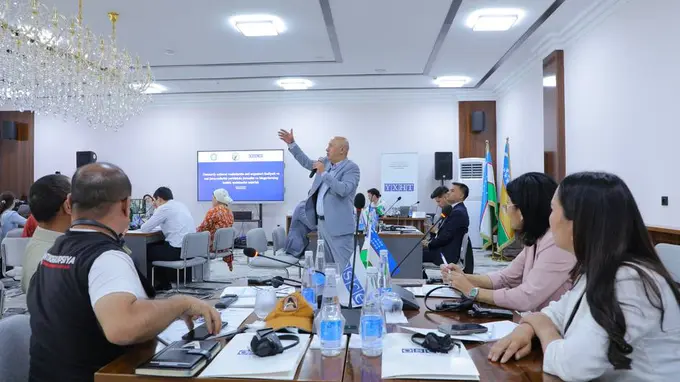
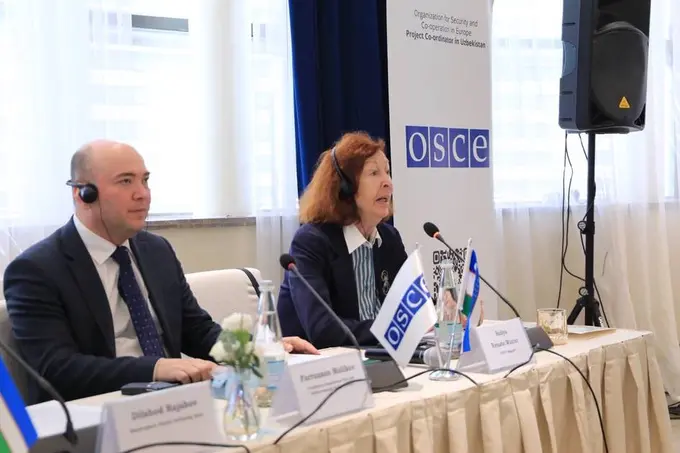
The OSCE equipped the next generation of journalists with modern media skills during a five-day course held at the International Nordic University in Tashkent from December 2 to 5.
Organized in partnership with the Public Foundation for Support and Development of National Mass Media, the International Nordic University, and the Modern Journalism Development Centre, the course focused on media law, information security, ethical reporting, and fact-checking.
Participants learned to navigate today’s complex media landscape, focusing on media legislation, ethical reporting, and information security. Practical exercises and real-life case studies helped trainees understand how to obtain information from government agencies, verify facts, and identify misinformation—a key skill for modern journalism.
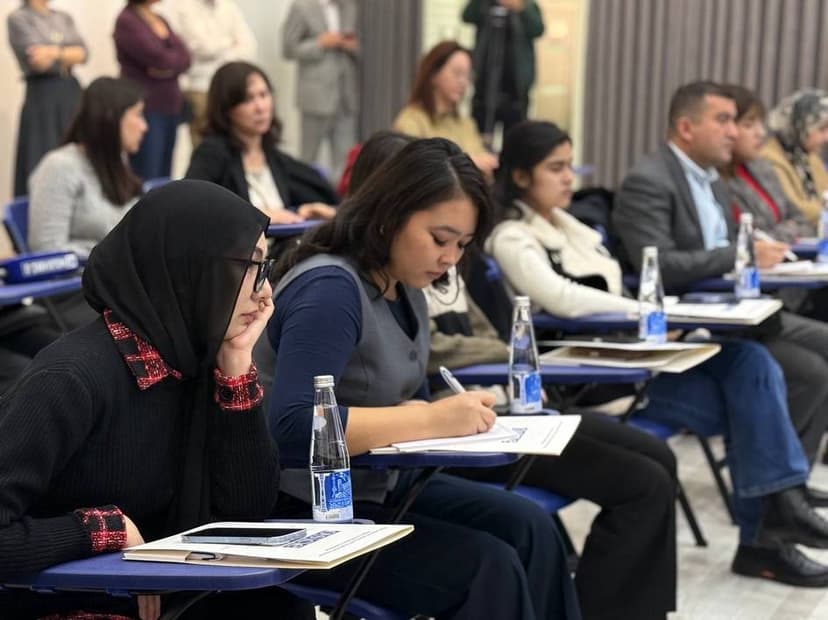
The program also emphasized digital technologies and artificial intelligence (AI), which play an increasingly prominent role in media production. Trainees explored how AI could aid in content creation while also addressing ethical concerns, including privacy, “deep-fake” media, and the use of copyrighted material without consent.
Under expert guidance, participants developed practical skills such as shooting professional-quality video on smartphones, producing content for social media platforms, and analyzing audience engagement metrics.
Beyond technical skills, the course sought to foster critical thinking, responsibility, and ethical reporting. This year’s training was connected with the “16 Days of Activism against Gender-Based Violence” campaign, highlighting issues of digital violence, media literacy, and responsible online content creation.