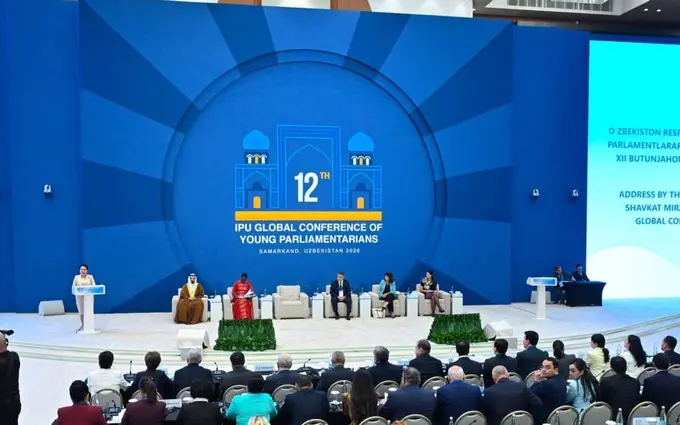
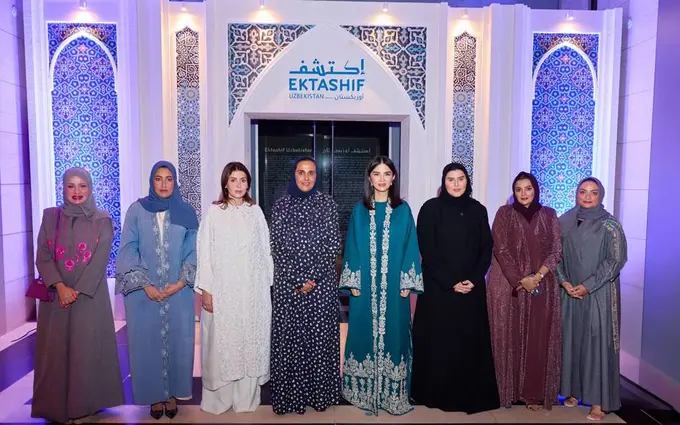
President Shavkat Mirziyoyev visited the Center for Islamic Civilization on October 20 to review ongoing work aimed at showcasing Uzbekistan’s rich historical and spiritual heritage through modern exhibitions and displays.
The Center, launched under a presidential decree on June 23, 2017, and whose foundation was laid on Ramadan Eid in 2018, stands as one of the country’s most significant cultural projects. The complex combines traditional architectural design with modern construction, featuring 34-meter-high roofs on all sides and a 65-meter dome inspired by national motifs.
At the heart of the complex lies the Hall of the Holy Quran, where the ancient Osman Mushaf—a revered manuscript considered one of the earliest copies of the Quran—is preserved. The hall also displays manuscripts from various dynasties, including the Samanids, Karakhanids, Khorezmshahs, and Timurids, along with early Uzbek translations and rare Quranic texts from around the world.

In line with the president’s initiative, several historical artifacts and manuscripts previously kept abroad have been returned to Uzbekistan, further enriching the Center’s collection.
The facility includes a 460-seat conference hall, designed to host international gatherings and scholarly events. The exhibitions within the complex trace the evolution of civilization and scholarship across different eras — from pre-Islamic civilizations and the First and Second Renaissances to “New Uzbekistan – New Renaissance.”
Visitors can also explore dedicated sections highlighting the lives and legacies of great scholars such as Imam Bukhari, Imam Tirmizi, Abu Mansur Maturidi, and Bahauddin Naqshband, as well as the contributions of influential women in Uzbek history, including Bibi-Khanym, Nodirabegim, Uvaysiy, and Anbar Otin.
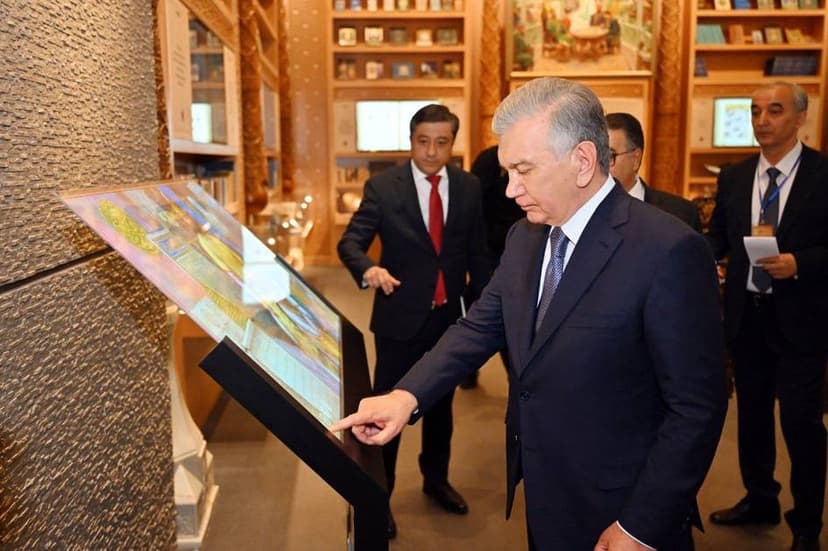
President Mirziyoyev stressed the importance of strengthening the Center’s scientific and educational mission, calling for closer cooperation with the International Academy of Islamic Studies of Uzbekistan and research institutions named after prominent theologians.
During the visit, the President inspected the interior finishing and installation of modern technologies, reviewed the layout of exhibitions, and discussed ways to make the presentations more engaging for both domestic and international audiences.

He emphasized the need to train qualified specialists and guides to ensure visitors gain a deeper understanding of Uzbekistan’s spiritual and intellectual legacy.
The Head of State also provided a set of recommendations to further enrich the content and presentation of the Center’s activities, ensuring it serves as a vibrant space for education, cultural exchange, and preservation of the nation’s spiritual identity.