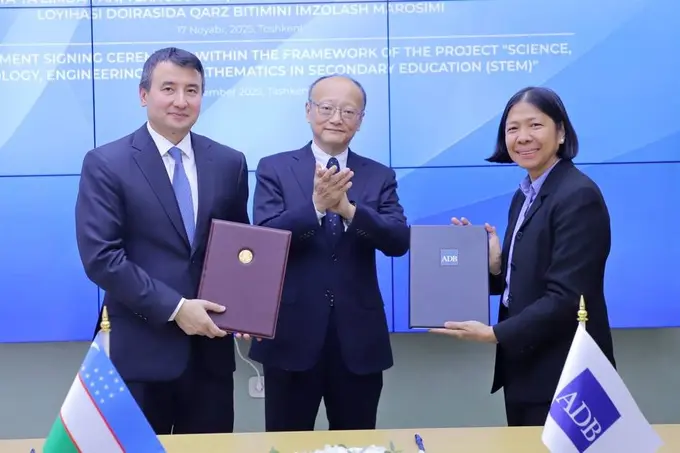
The World Bank’s board of executive directors has approved a $250mn loan to Uzbekistan to support the development of the country’s student financing system, according to the organization’s official announcement on December 11. The funding will be used to implement the EduImkon program, which aims to expand equitable access to student financing across higher, technical, and vocational education.
Under the program, up to 600,000 young people in Uzbekistan are expected to gain access to educational loans by the end of 2028. Approximately 80% of the total financing—$190mn—will be allocated to students from low-income families and to female students.
World Bank states that, Uzbekistan has seen an increase in higher education enrollment, rising from 8% of secondary school graduates in 2017 to 48% in 2024. This rapid growth has increased pressure on the existing student loan system, which operates through local banks with state support. The current model does not fully reflect labor market demands, as evidenced by insufficient loan availability in high-demand fields such as science, technology, engineering, mathematics (STEM), and information technology.
The World Bank also noted the gender imbalance in STEM enrollment. Women make up only one-third of STEM students, compared to 55% of students across all fields of study.
The EduImkon program is designed to reduce barriers within the student financing system. The ministry of economy and finance will launch a unified online platform to streamline the processing of educational loan applications. The program aims to increase transparency in loan decision-making and improve tracking of student progress. A roadmap will be developed to modernize administrative and operational processes in student lending.
Additional measures will focus on expanding access to higher and vocational education for women and low-income students. This includes simplifying eligibility criteria for loans and reforming government support mechanisms.
The program will also work to better align education with labor market needs. The ministry of economy and finance plans to introduce income-contingent loan repayment mechanisms intended to support students with low incomes and graduates experiencing temporary unemployment.
An additional objective of the EduImkon initiative is to attract $30mn in private investment, which is expected to expand student loan opportunities and reduce the fiscal burden on the state budget.