Uzbekistan is expanding high-value manufacturing with the launch of a new ceramic production facility capable of producing 8mn square meters annually and targeting $35mn in exports, as part of efforts to deepen processing of local raw materials.
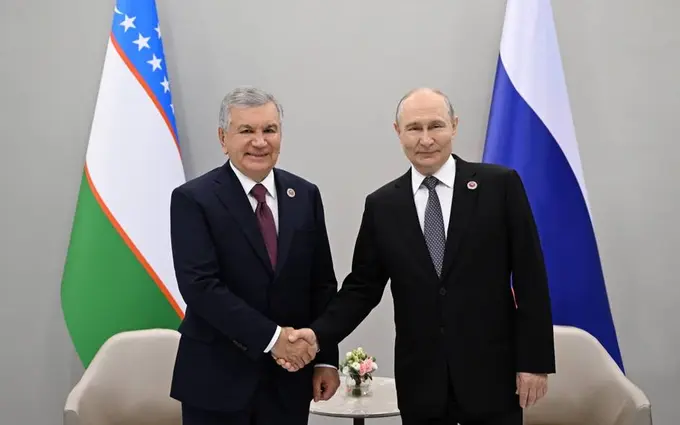
Shavkat Mirziyoyev visited the Crown Ceramic joint venture in Quvasoy, where he reviewed the production of large-format ceramic granite tiles designed for both domestic and export markets.
The Crown Ceramic project is designed to produce 8mn square meters of ceramic granite tiles annually and generate $35mn in exports, with total output valued at UZS 1 trillion ($80mn) and UZS 665bn ($52mn) in added value.

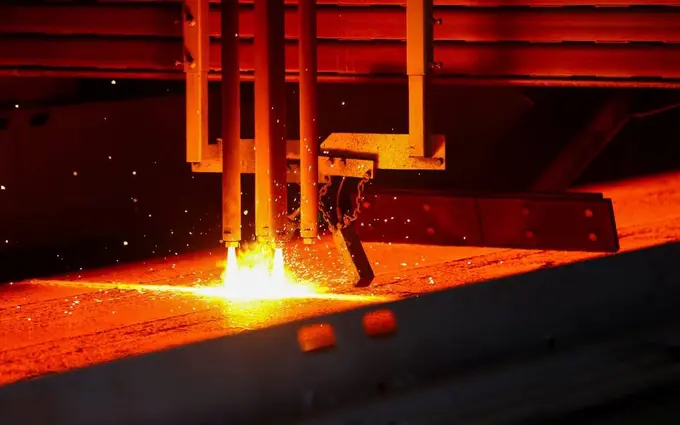
The facility uses 97% locally sourced raw materials, primarily from Quvasoy and Angren, and processes up to 600 tons of stone, 100 tons of red kaolin, and 100 tons of gray kaolin daily, transforming basic materials into high-value products.
Uzbekistan’s ceramic sector includes 47 enterprises, which produced 47.2mn square meters in 2025, covering 128.6% of domestic demand, reflecting growing capacity for both import substitution and exports.
The plant manufactures large-format tiles—rare in Central Asia and Eastern Europe—across six formats, with quality levels designed to compete with products from Italy, Spain, and China.
Production is fully digitized and energy-efficient, reducing electricity use by up to 20%, while environmental systems include water recycling, rainwater reuse, and modern filtration technologies.

In the first quarter of 2026, exports reached $400,000, supplying 80,000 square meters to Kyrgyzstan and Tajikistan, with expansion planned into Kazakhstan, Russia, and European markets.
A further $20mn investment project will localize glaze production with annual capacity of 50,000 tons, expected to generate $10mn in exports, create 100 jobs, and cover up to 85% of domestic demand when launched in September 2026.
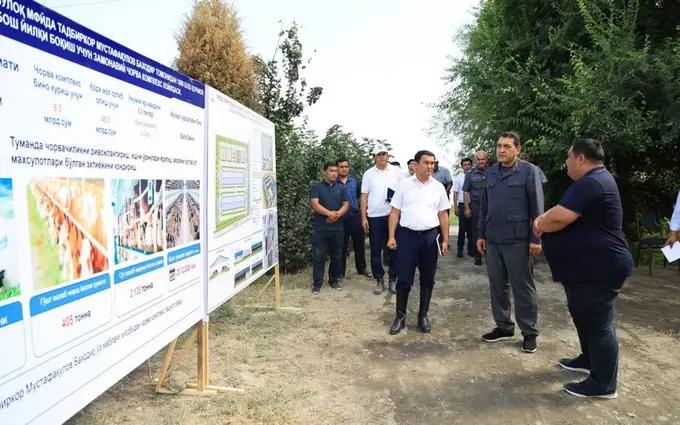
Alongside industrial development, the president reviewed the Quva Agrostar complex, which integrates agricultural production, processing, storage, packaging, and export within a single system.

The facility produces up to 5,000 tons of agricultural products annually across 12 categories, addressing a key structural gap where farmers previously lacked access to storage, processing, and export channels.
The project is part of Uzagrostar Holding, which has established specialized agro-complexes in 21 districts, aiming to consolidate fragmented production chains and increase export-oriented output.
Modern technologies imported from Italy, Spain, Germany, and China, along with international certifications such as Global GAP, ISO 22000, Halal, and HACCP, support product quality and access to demanding markets.

In 2025, the complex began exporting by air to Japan and South Korea for the first time, with plans to reach $25mn in exports in 2026.
The system also integrates local communities. Cooperation has been established with 3,000 households and 1,000 farms across 33 mahallas, where residents are being trained to generate up to UZS 250mn ($20,000) in income from 0.1 hectare plots through intensive agricultural practices.
Officials emphasized that household farming is being transformed into a structured form of family entrepreneurship, supported by training in crop selection, cultivation techniques, post-harvest handling, and export-oriented packaging.
The president highlighted that “such projects demonstrate how efficient land use, deep processing, and export orientation can significantly increase incomes,” stressing the importance of scaling these models.
As part of this strategy, Uzbekistan plans to introduce advanced agro-technologies on 50,000 hectares in the Fergana region as a pilot initiative.