The European Union-funded “Sustainable Energy Connectivity in Central Asia” (SECCA) project has concluded its activities in Uzbekistan, with a Closing Roundtable held in Tashkent to present key results achieved between March 2022 and May 2026.
The event brought together representatives of the Agency for Strategic Development and Reforms under the President of Uzbekistan, the EU Delegation, financial institutions and private sector stakeholders.
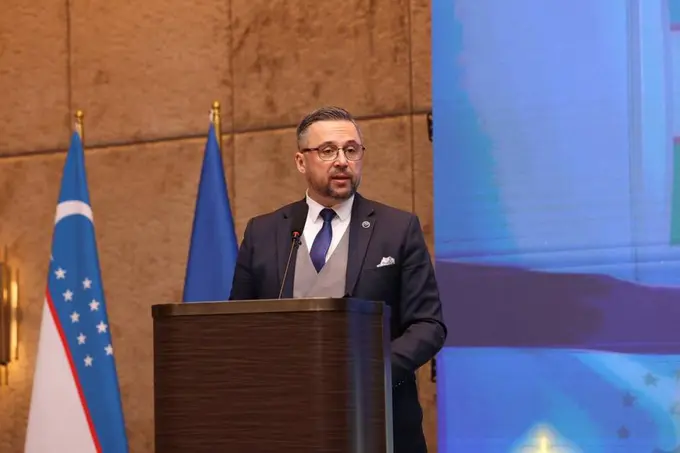
Abdulla Abdukadirov, First Deputy Director of the Agency, and EU Ambassador to Uzbekistan Toivo Klaar opened the discussion, highlighting the importance of Uzbekistan–EU cooperation in strengthening energy security, advancing sector reforms and accelerating the country’s green transition.
During its implementation, SECCA provided technical assistance, policy advice and capacity-building support aimed at promoting a more sustainable energy mix.

In Uzbekistan, the project contributed to improving the legal and regulatory framework for energy efficiency in buildings, including mechanisms to stimulate the market for energy service companies (ESCOs). It also strengthened institutional capacity in energy governance and strategic planning, supported regional energy modelling initiatives and assessed the technical potential of rooftop solar installations.
The initiative enhanced research cooperation and supported Uzbekistan’s participation in the EU’s Horizon Europe programme, while public awareness campaigns promoted sustainable energy practices among schools, universities and the wider public.
During the Roundtable, participants discussed priorities for future cooperation. Sven Ernedal, Programme Manager of EU4SustainableCentralAsia, presented ongoing and planned activities in Uzbekistan, outlining opportunities to build on SECCA’s results. The Roundtable reaffirmed the European Union’s long-term commitment to supporting Uzbekistan’s sustainable energy transition in line with national reform goals.

Earlier, Uzbekistan intensified cooperation with both German and EU counterparts in green energy and critical raw materials during Foreign Minister Bakhtiyor Saidov’s visit to Berlin, advancing trade, investment and renewable energy partnerships.
Under the recently approved 2026 reform package within the “Uzbekistan–2030” Strategy, the government plans to raise the share of renewable energy to 30% as part of broader economic modernization.