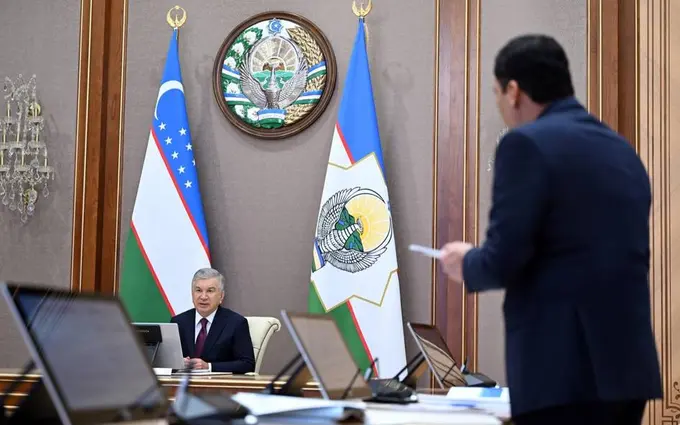
President of Uzbekistan Shavkat Mirziyoyev reviewed proposals aimed at expanding and improving support for socially vulnerable groups on December 17, as per to the presidential press service.
The review focused on the results and further development of the Unified Social Protection Registry. To date, 1.8 mn households have been assessed through the system. As a result, 739,000 families identified as low-income or at risk of poverty were included in the registry, making them eligible for state benefits and financial assistance.
To enhance the effectiveness of social support, it is proposed to establish a new Social Registry that will integrate data from the existing Social Protection Registry and the Registry of Poor Families. Families included in the new registry will be classified into three categories based on their socioeconomic status: families receiving state support, low-income families, and families at risk of poverty.
Social assistance will be provided using a differentiated approach, taking into account household income levels and employment potential. For each category, a specific set of support measures and social services will be defined. Certain categories of families with disabilities will be eligible for assistance without employment-related requirements.
Local community structures known as “Mahalla Sevens” will be granted the authority to include families in the social registry if household members have limited capacity to work or are experiencing difficult life circumstances.
The proposals also include measures to increase the incomes of families included in the registry and to promote employment and entrepreneurship among able-bodied household members. In addition to financial support, families will have access to social services in areas such as healthcare, employment assistance, and housing.
Another key initiative discussed during the review is the establishment of territorial social service centers across the country. The first 20 centers are planned to open in 2026–2027. These centers will provide comprehensive services, including care, supervision, habilitation, rehabilitation, and daytime education for individuals with disabilities and others in need of care.
The proposals also предусматривают further digitalization of social services, including the introduction of electronic referral systems, aimed at improving coordination and access to assistance.